2026-07-09 → 2026-07-11
Three Days in London
London, England, United Kingdom
Three Days in London
The trip nearly came off the rails before it left the station — literally.
Our morning train out of Germany left Ringsheim at 6:57, and getting to that platform was a problem I'd been trying to solve for two days. I'd gone to the hotel desk 48 hours ahead to book a taxi for Thursday morning, and nobody could get a single cab company to commit to the ride. The clerk kept assuring me that if I just came down early and called that morning, a car would materialize. It did not. The cab fell through completely.
That left the bus, and the bus was a nail-biter by design: the first 7231 of the day departed at 6:41 and was scheduled to reach the station at 6:47, which is ten minutes before a train I could not afford to miss. Way too close for my nerves — and then the bus itself rolled in six or seven minutes late, which turned my already-thin margin into basically none. We piled off at Ringsheim, ran flat-out for the platform, and made it with maybe one minute to spare. Pure luck. The alternative — rebooking a whole new path from southwest Germany to London — would have been a miserable all-day affair. My hard-won advice to anyone doing this leg: pre-book a proper black car the day before. It costs a little more, and it is worth every cent in peace of mind.
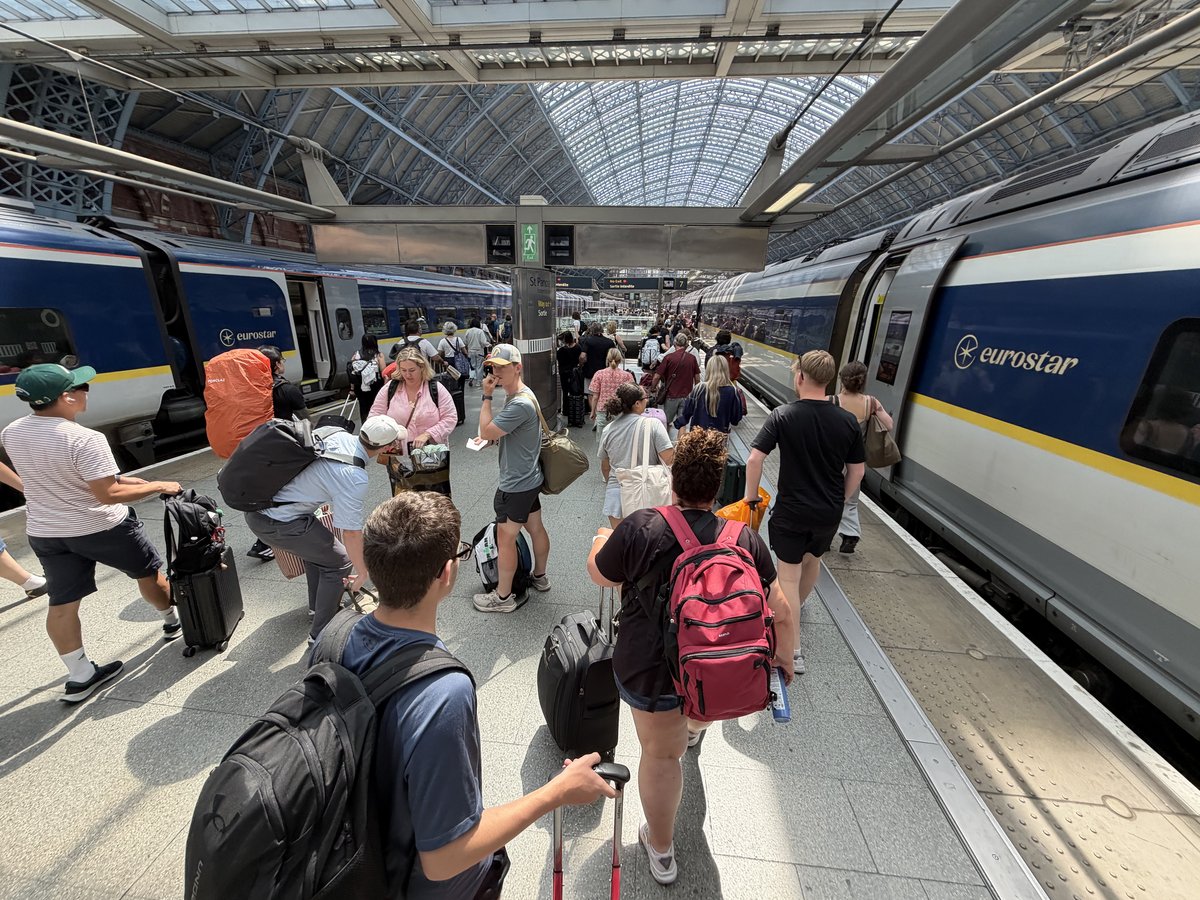 Once we were actually on the train, the day got easy. A fast, direct run to Paris, a quick station switch, and then the Eurostar straight under the Channel to London. We surfaced at St Pancras, grabbed a cab, and made our way to our hotel on Liverpool Street.
A word about Liverpool Street on a weekday: it is madness. It has to be one of the busiest patches of London during the work week — a churning sea of suits and commuters pouring in and out of the station and the surrounding towers of the City. We'd landed right in the financial heart of London, and at that hour it felt like it.
We were staying at the Andaz London Liverpool Street, which turned out to be an excellent hotel — it occupies the old Great Eastern Hotel, a grand Victorian railway hotel from the 1880s, all heritage brick and high ceilings, right beside the station. We dropped our bags and ducked around the corner for a bite at Patty & Bun, near the Star, to get some food in us. Then we went back up to decompress for a bit before heading down to the lobby for the hotel's happy hour — one of the nice little perks of the place, and exactly what a travel-frazzled family needed.
Day One: Westminster on foot
Recharged, we walked over to Liverpool Street station and caught the Circle line across to Westminster, which is about the most dramatic place in the city to come up out of the Underground. You climb the stairs, and there it is.
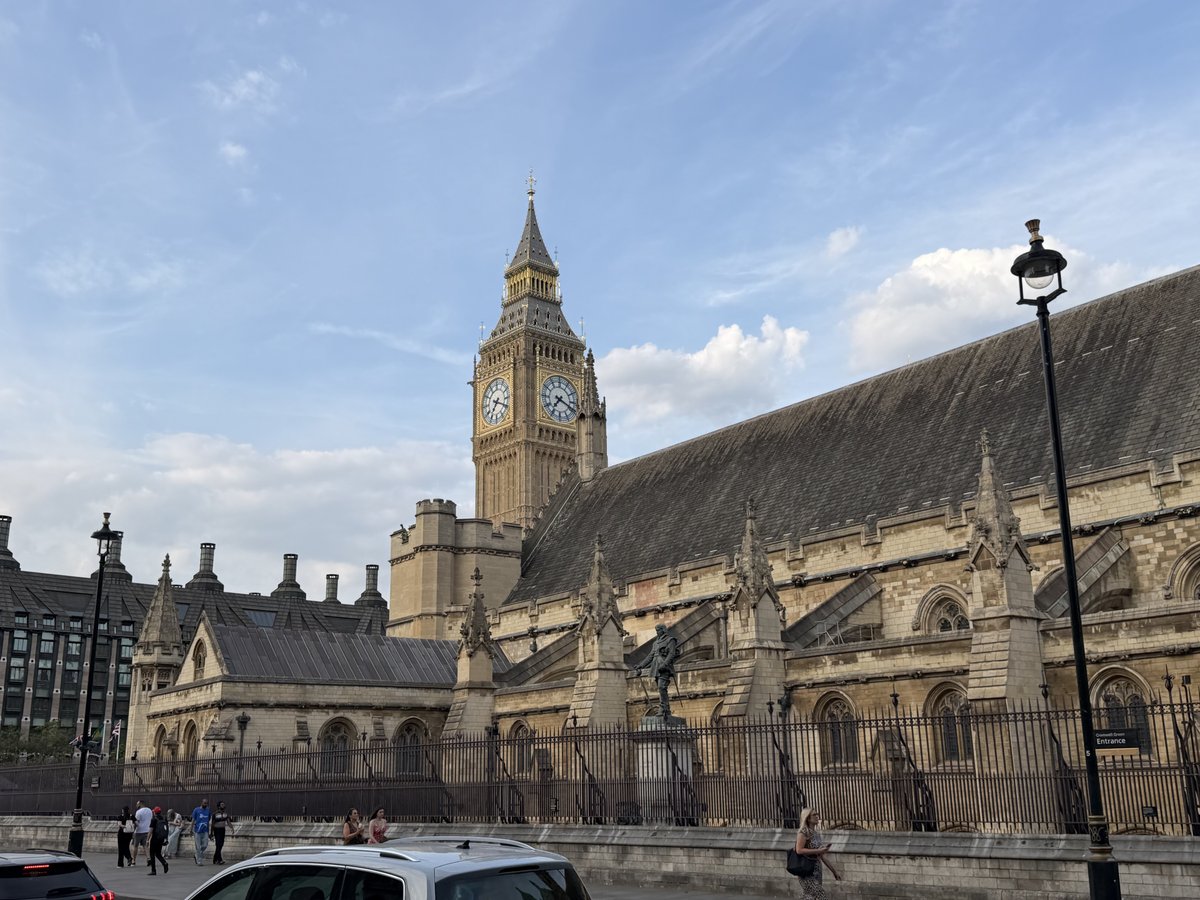
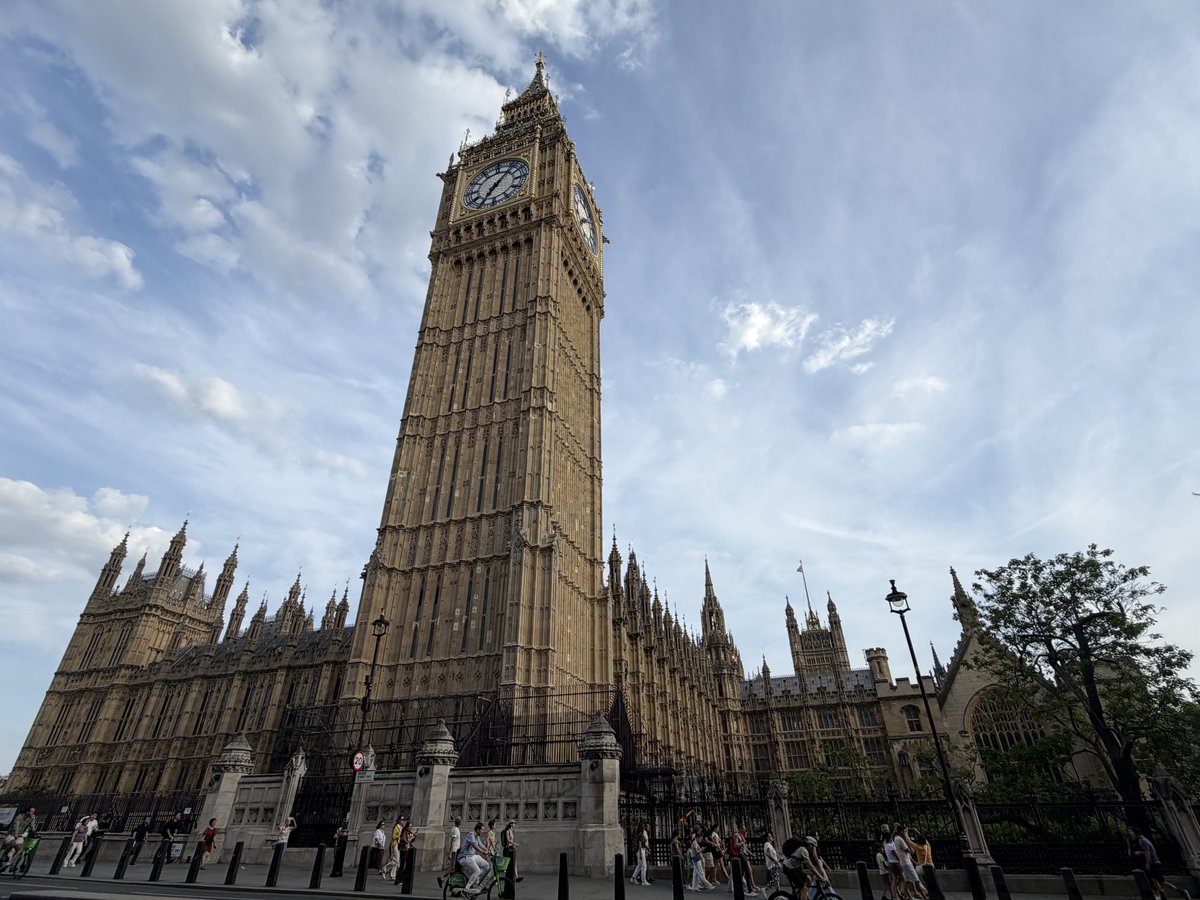 Big Ben — technically the name of the great bell, though everyone uses it for the whole clock tower, now officially the Elizabeth Tower — was gleaming, freshly restored after its long refurbishment. Right beside it sprawl the Houses of Parliament, the Palace of Westminster, that endless Gothic Revival pile that Charles Barry and Augustus Pugin designed after the medieval palace burned in 1834. We walked the whole precinct and took it all in.
Across the way is Westminster Abbey, where English monarchs have been crowned since 1066 and where a thousand years of the nation's history is buried under one Gothic roof. In Parliament Square and the streets around it, we worked our way past the statues — including the bronze of Oliver Cromwell standing outside Westminster Hall, which I was genuinely glad to finally photograph. On my last visit to London, twenty years ago, he was boarded up behind scaffolding, so this was a small personal box checked. Cromwell remains one of the most divisive figures in British history — the man who helped execute a king and rule as Lord Protector — and the fact that his statue stands right outside the seat of the monarchy he overthrew is a very British kind of contradiction. Nearby stands the famous stooped, brooding statue of Winston Churchill, unveiled in 1973, keeping watch over the square.
We looped past the entrance to the Churchill War Rooms, the underground bunker complex where Churchill and his cabinet ran the Second World War, now preserved as a museum; the Cenotaph on Whitehall, Edwin Lutyens's stark and beautiful national war memorial from 1920; and the grand equestrian statue of Prince George, Duke of Cambridge, the Victorian army chief who sits astride his bronze horse in the middle of Whitehall.
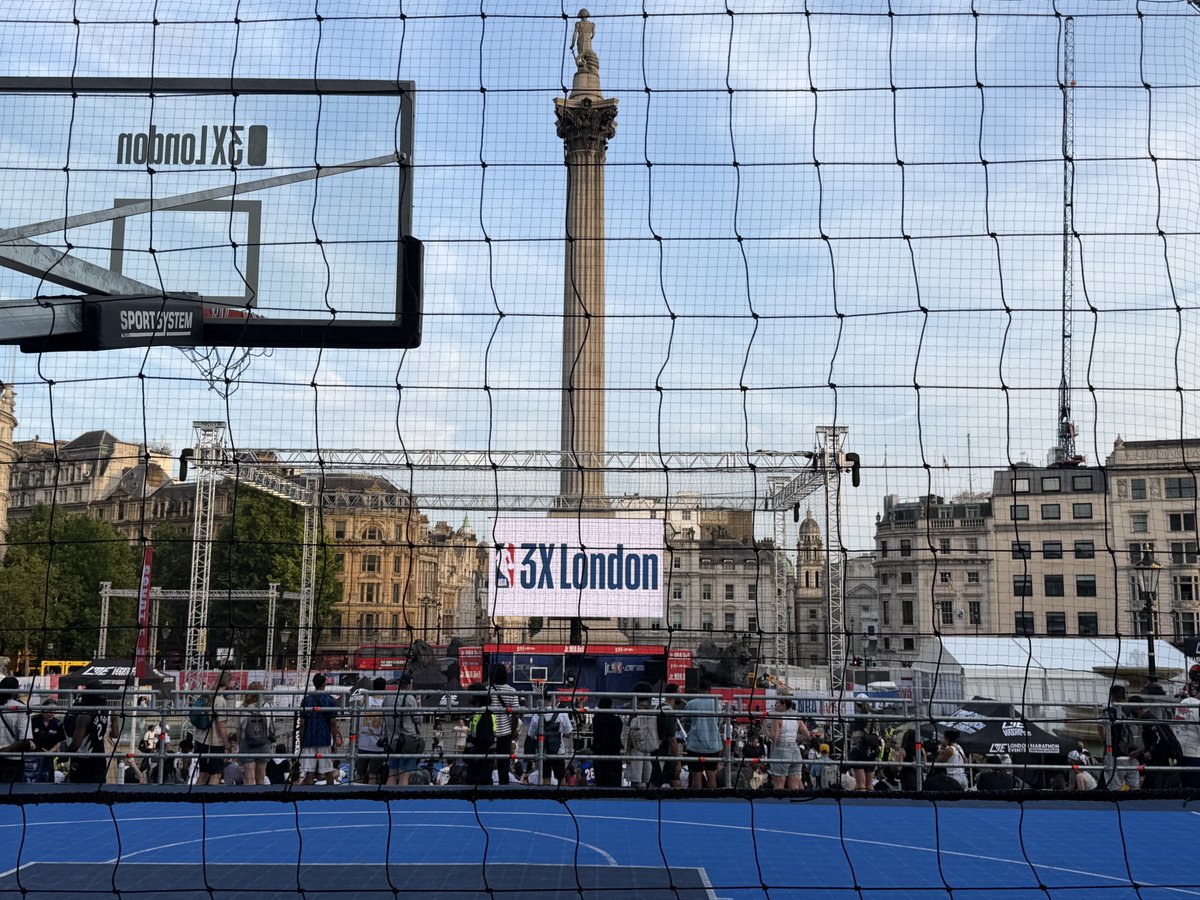 That brought us to Trafalgar Square, and we walked the entire way around it — Nelson's Column, the great lions, the fountains. The famous openness of the square was pretty thoroughly clogged that day: they were running some sort of NBA event in it, so the wide-open plaza most people picture was packed with staging and crowds. Still worth the lap. From there we strolled down The Mall, the ceremonial red avenue that runs under Admiralty Arch straight to Buckingham Palace, and stood at the gates for the obligatory look before the day caught up with us. We caught the Underground back toward the Andaz and called it a night — a solid first day of pure, on-foot London.
Day Two: the Tate Modern and the West End
We were up and out early for the thing I'd most been looking forward to: the Tate Modern. We walked to the corner and took the 344 bus down to the Bankside pier, right at the museum's front door.
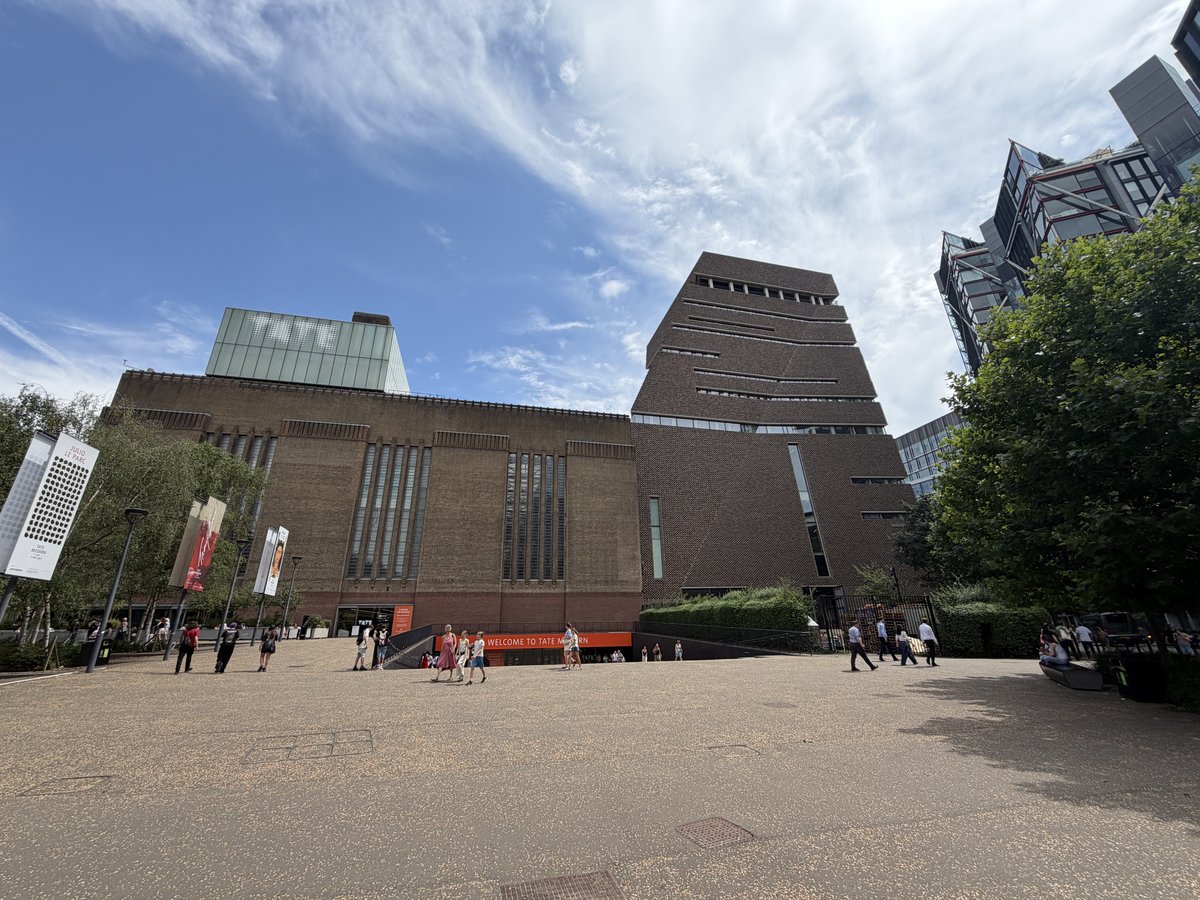 If you don't know the building's story, it's a good one. The Tate Modern lives inside the former Bankside Power Station, a colossal brick temple of a building designed by Sir Giles Gilbert Scott — the same architect behind the classic red British telephone box — which generated electricity right across the river from St Paul's until it was decommissioned. The Swiss architects Herzog & de Meuron converted the shell into a museum, and it opened in 2000 to instant acclaim. The heart of it is the Turbine Hall, the vast cathedral-like space that once held the station's generators and now runs the full height and length of the building. And like Britain's other great national museums, entry to the main collection is free — the wider Tate family traces back to the Victorian sugar magnate Sir Henry Tate. We walked the free galleries and skipped the ticketed special exhibitions, and there is more than enough in the free collection to fill a morning.
Catrina and Preston weren't quite as over the moon about it as I was — modern art is an acquired taste, and a sixteen-year-old has a finite tolerance for staring at canvases — but they humored me and came along for the whole thing, which I appreciated. A few of the works that stuck with me:
Marcel Duchamp's Fountain — the infamous porcelain urinal he signed "R. Mutt" and submitted as art in 1917, arguably the single most provocative and influential gesture in modern art, the thing that blew the doors off what a work of art could even be. Salvador Dalí's Metamorphosis of Narcissus, a hallucinatory surrealist double-image of the Greek myth. Matisse's bronze Back reliefs. Cildo Meireles's Babel, a towering column built from hundreds of stacked radios, all murmuring at once — a literal tower of babble. Martin Kippenberger's deeply strange Fred the Frog Rings the Bell. Mondrian's crisp grid Composition C. Lee Krasner's stormy Gothic Landscape. Warhol's Marilyn Diptych, the fifty silkscreened Marilyns fading from vivid color to ghostly gray. Robert Indiana's LOVE.
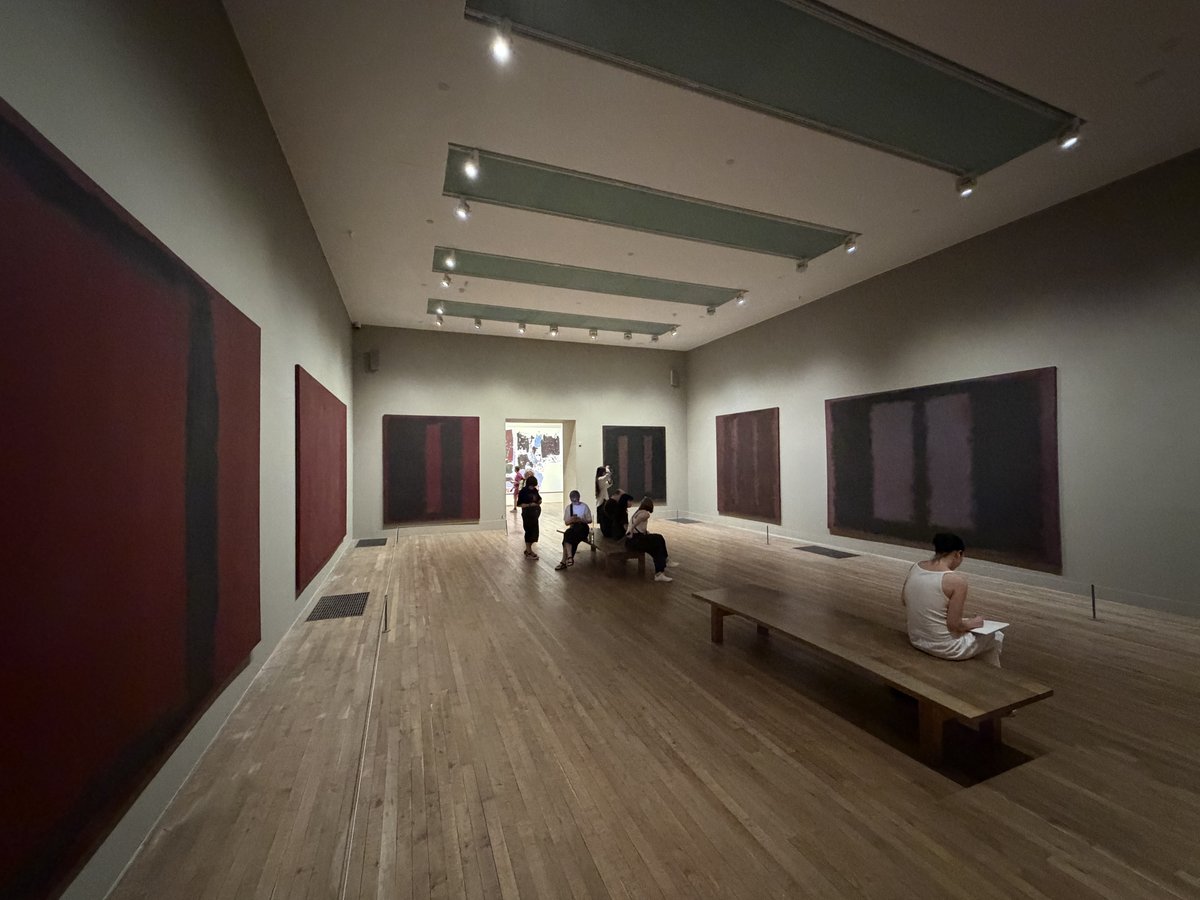 And, of course, the Rothko room. In 1958 Mark Rothko was commissioned to paint a series of murals for the swanky Four Seasons restaurant in New York's Seagram Building. He worked on them obsessively, then had a change of heart — he couldn't stomach the idea of his art hanging as decoration for rich diners — pulled out of the deal, and eventually donated a set of the dark, brooding canvases to the Tate. In one of those details that sounds invented, they reportedly arrived in London on the very day of his death in 1970. The Tate shows them the way Rothko wanted: together, in a dim, quiet room, where those enormous maroon-and-black fields just hum at you. It's less a gallery than a chapel.
After the museum we walked along Bankside, where Catrina and Preston got pizza from Spizza Napoletana and I grabbed a plate of kung pao from a nearby vendor — an unglamorous but perfectly good riverside lunch. Then we took the Underground over to Piccadilly Circus, strolled around the lights and the crowds for a while, and headed back to the hotel to change for the evening, because we had a West End show to get to.
First, dinner right at the hotel, at the attached pub, Lady Abercorn's. In proper pub fashion, I had the bangers and mash, and Catrina had the fish and chips. I'm going to go ahead and guess Preston had a burger — some things you can set your watch by.
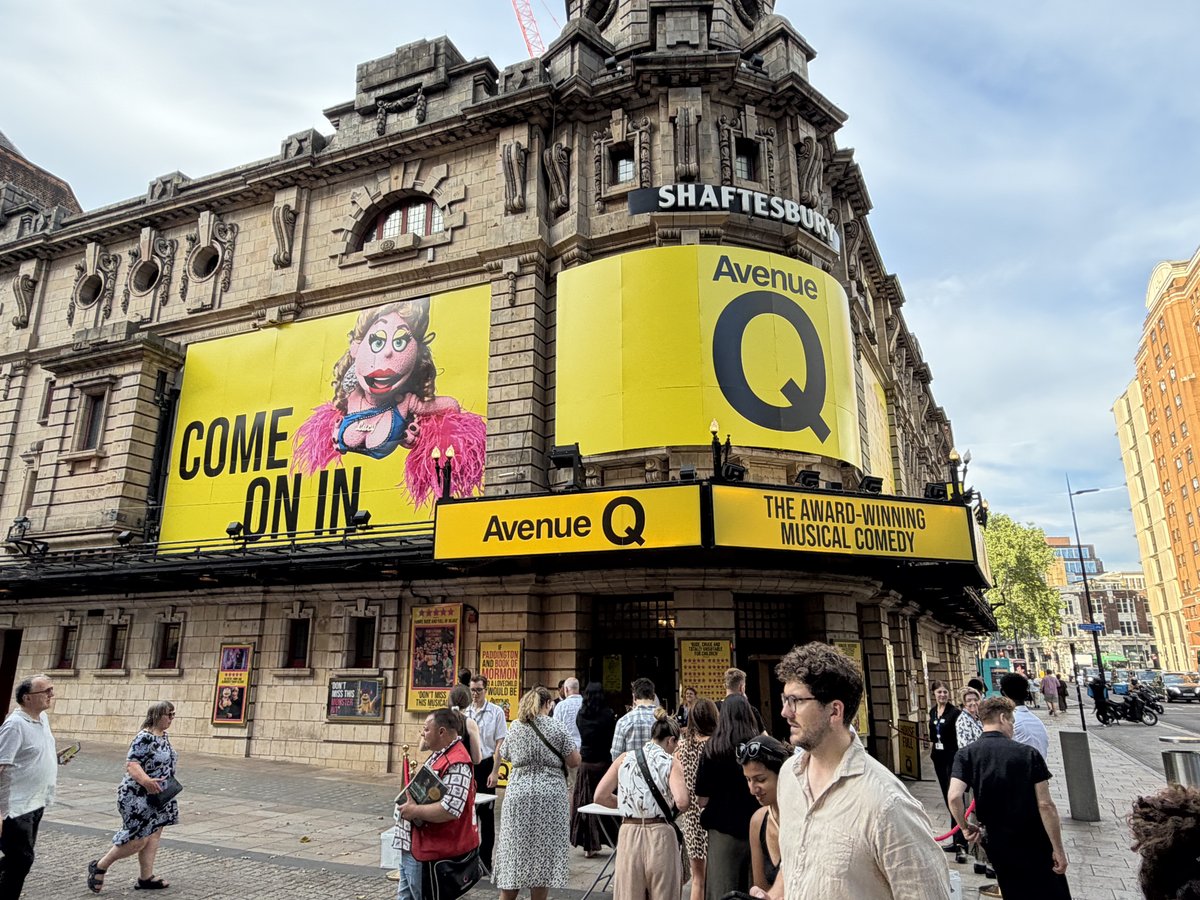 Then back onto the Underground and out to the West End for Avenue Q. This was our first show of the London leg, and the second time Catrina and I had seen it — but Preston never had, and he loved it, which, given that it's a filthy, hilarious puppet musical and he's sixteen, was about the safest bet of the entire trip. It played at the Shaftesbury Theatre, a gorgeous Edwardian house that opened on Boxing Day in 1911 (originally as the New Prince's Theatre), designed by Bertie Crewe and today billed as the largest independent theatre in the West End. It's a real piece of history — this is the theatre where the musical Hair famously ran for nearly 2,000 performances until the roof literally caved in. The room is intimate and beautiful. And a practical note for anyone visiting in a heat wave, which was very much still in effect: London theatres are mostly too old for proper central air, so they crank portable AC units to the gills before the show and again during the interval to get the room down to something survivable. It worked well enough, and interval drinks in a hundred-year-old West End theatre are one of those small, civilized pleasures. Afterward we wandered the West End for a bit before catching the tube back to the hotel.
Day Three: Iron Maiden Day
The last day had one enormous thing on the calendar, so the morning was deliberately slow. I played the nice guy again and let Catrina and Preston sleep in while I wandered out into the City on my own with my phone, taking pictures of churches, little parks, and whatever caught my eye. There's no better way to feel out a neighborhood than to walk it alone at your own pace.
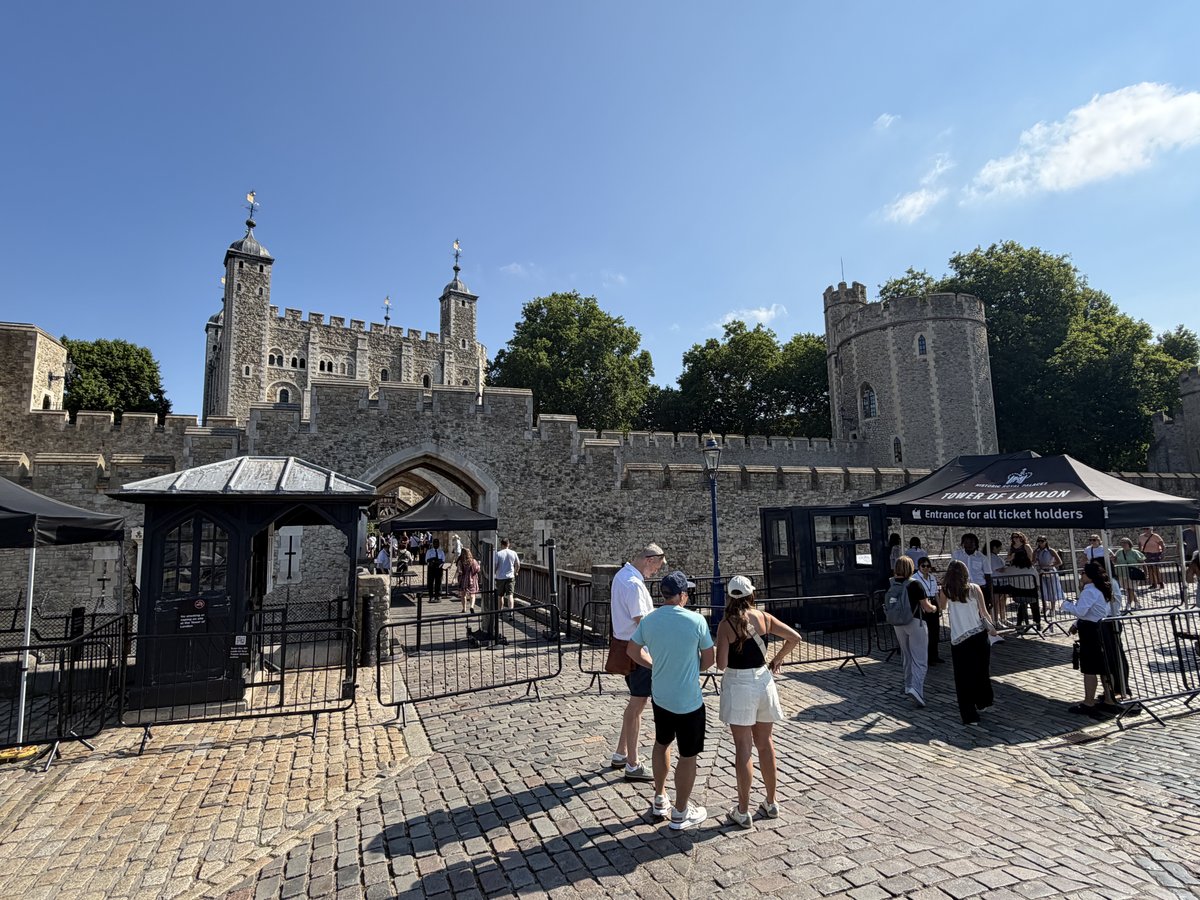 I made my way down to the Tower of London and did a full lap of the walls, getting my photos of the fortress and of Tower Bridge rising behind it. The Tower is nearly a thousand years old — William the Conqueror began the central White Tower around 1078 to cow his newly conquered city — and over the centuries it's served as royal palace, armory, treasury, and infamous prison, and it still guards the Crown Jewels behind its walls, watched over by the Yeoman Warders and the resident ravens. And a small public-service reminder, since people mix them up constantly: the photogenic bascule bridge with the two towers is Tower Bridge, opened in 1894 — not London Bridge, which is the plain one just upstream. I got my pictures of the real one.
Back at the hotel,** I got cleaned up, and all three of us went to lunch at the Polo Bar near the hotel, which put out excellent food and set us up for a long day and night ahead. Then it was time to go see Eddie.
We hopped from Liverpool Street over to Farringdon, where we caught the regional train north to Stevenage. By the time we rolled into Stevenage,** we were swept up in the hordes — thousands of people, all clearly headed to the same place we were. The Knebworth concert grounds are a shuttle ride from the station, and here the day threw its one real wrench: an accident and heavy traffic on the A1 gummed up the shuttle route, and we ended up queuing for a solid 45 minutes before finally boarding a slow bus out to the park.
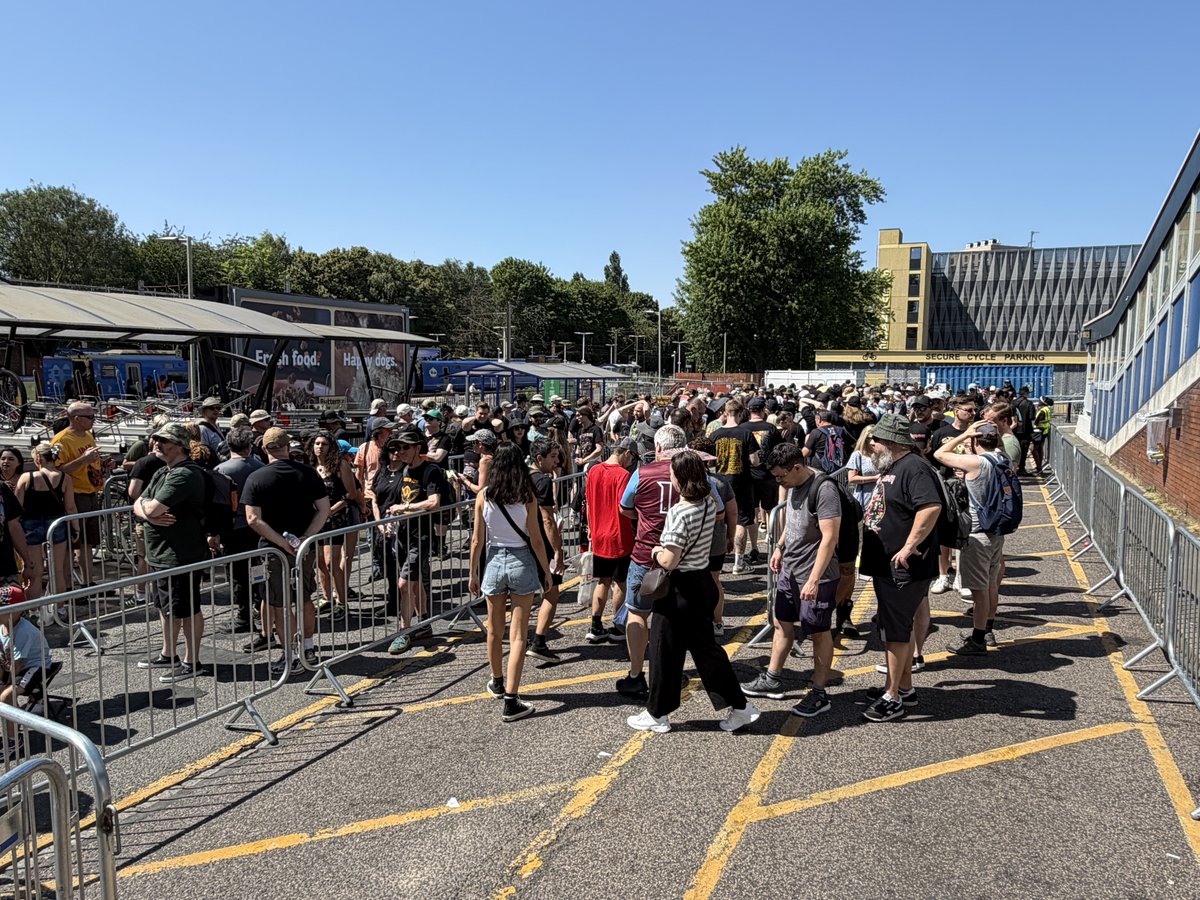 It was worth every minute of the wait. Knebworth House is a Gothic Tudor stately home in Hertfordshire, seat of the Lytton family, but to music fans the name means one thing: the great sweep of parkland out front, which since the 1970s has hosted some of the most legendary rock concerts ever staged in Britain — Led Zeppelin's final UK shows in 1979, Queen's very last concert with Freddie Mercury in 1986, Oasis's era-defining two nights in front of a quarter-million people in 1996. It bills itself, not unreasonably, as one of the greatest rock venues in the world. And on this night the headliner was Iron Maiden, with Airbourne, The Darkness, and The Hu down the bill — a full day of proper heavy metal in a field with real history under it. I've written the show up in full in a separate post over on the concerts page — Airbourne, Iron Maiden, The Darkness & The Hu at Knebworth — so I'll keep the play-by-play there. Short version: Maiden at a place like Knebworth is exactly as good as it sounds.
Getting home was its own small adventure. We'd pre-arranged a car to collect us afterward, but the pickup point was set more than a mile from the show gates, and by the time the set ended and we'd hiked out to it, the night had actually turned cold — the first time all week the heat wave had let up, and of course it happened while we were standing in a dark field waiting on a ride. But the car did come, even if it was running an hour behind thanks to the same A1 traffic that had snarled us on the way in. Once we were moving, we zipped back toward London with clear roads almost the whole way, right up until we hit the city itself.
And that was London. Time to rest up — because in the morning we had a flight to catch. Next, and last, stop: Dublin.
Final thoughts
London rewards the walker. Over three days we barely touched a fraction of it, but the shape of the city came through anyway — the frantic weekday energy of the City around Liverpool Street, the thousand-year gravity of Westminster and the Tower, a former power station turned into one of the world's great art museums, a hundred-year-old theatre wheezing out cold air so we could laugh at puppets in a heat wave, and a metal show in a historic field an hour north. We ran for one train, waited an hour on one car, and sweated through most of it, and it was one of the best legs of the trip. On to Ireland.