2026-07-05 → 2026-07-06
Two Days in Paris
Paris, Île-de-France, France
Two Days in Paris
There's a particular kind of relief in trading a theme park for a real city. We'd had a wonderful three days at Disneyland Paris, but after a stretch of that — even a good stretch — you start to crave the version of France that isn't built to a story. So on our last morning at the resort we checked out of the Sequoia Lodge (no tears shed over that room), walked to the station by the park, and pointed ourselves at the actual capital.
At the station we picked up all-day metro passes, which was the smart move — the same ticket covered the regional express train into the city and every metro ride we'd make for the rest of the day. The regional train turned out to be an easy, painless way to cover the distance from the park to the center of Paris, and before long we were climbing up out of the underground into the real thing.
We were staying at Hôtel Le Milie Rose, a small boutique hotel in the 10th arrondissement, near the Gare du Nord. We dropped our bags and headed straight back out, because it was lunchtime and we had a whole city to get into.
Day One: Up the Champs-Élysées, and the Eiffel Tower at last
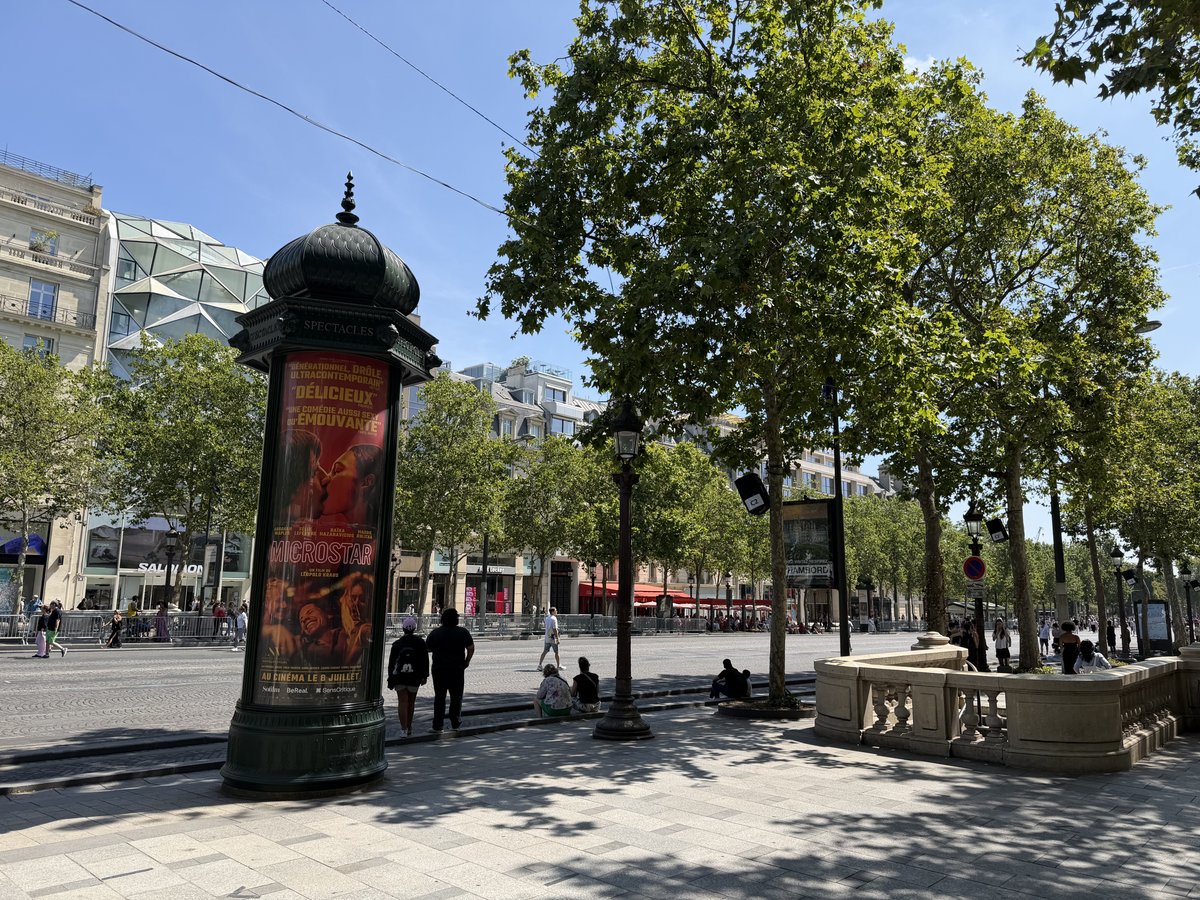 Our first stop was the Champs-Élysées, and our first meal in one of the great food capitals of the world was, I am slightly embarrassed to report, at Five Guys. Preston had been jonesing for a burger, and when a sixteen-year-old has locked onto burgers, you pick your battles. So there we were, in Paris, eating American fast food on the most famous avenue in Europe. I made a private vow that we'd remedy this with a proper dinner later — and we did. But first, the burgers.
The Champs-Élysées earns its reputation as "the most beautiful avenue in the world." It runs about a mile and a quarter in a dead-straight line, laid out originally as an extension of the gardens of the Tuileries back in the 17th century, and today it's a broad, tree-lined parade of luxury shops, cafés, and cinemas that climbs gently uphill toward the Arc de Triomphe. We walked its length after lunch, ducking into a couple of shops along the way, letting the avenue do its slow reveal — because the whole time, growing larger with every block, is the Arch itself.
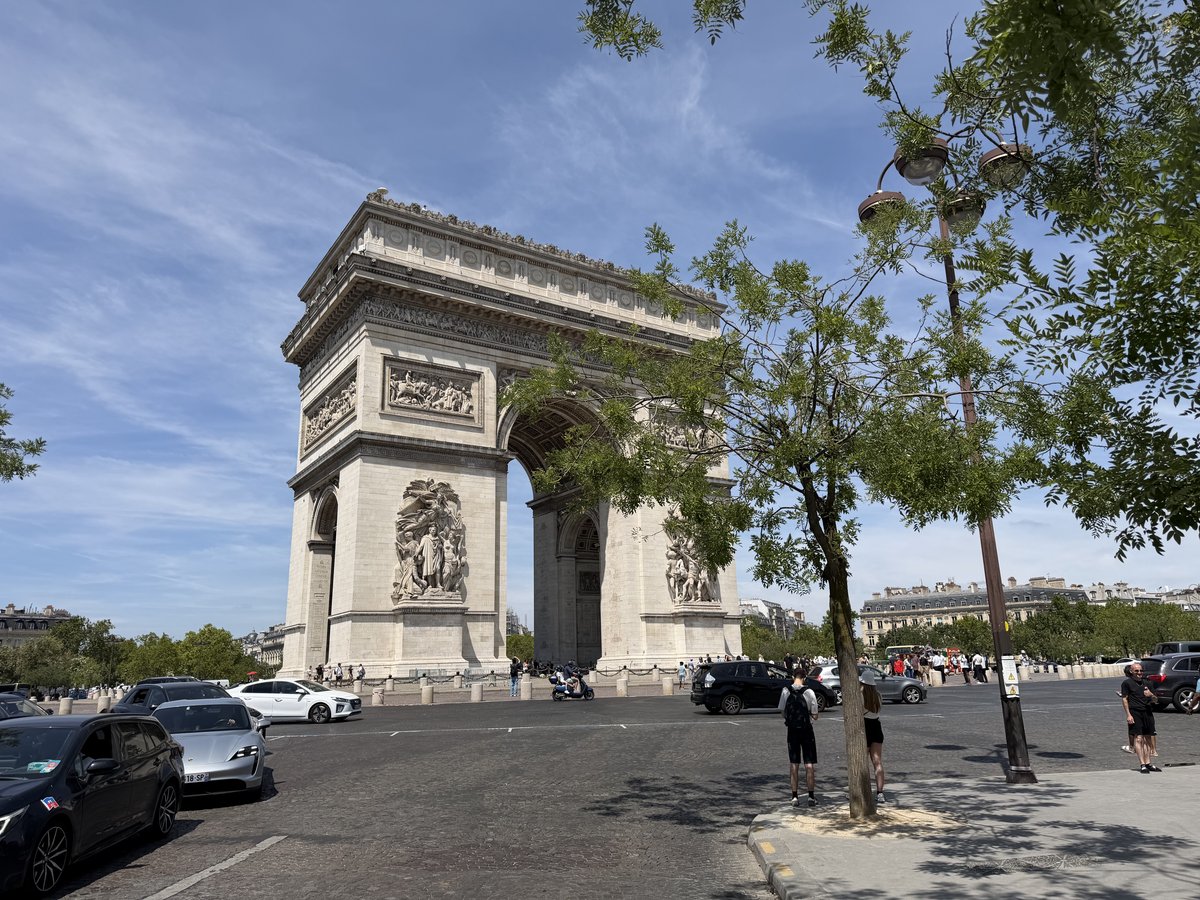 The Arc de Triomphe is one of those monuments that's even more imposing up close than in photos. Napoleon commissioned it in 1806, in the flush of his victory at Austerlitz, as a tribute to the soldiers of his Grande Armée. He never saw it finished; construction dragged on for thirty years and it wasn't completed until 1836, long after his fall — though in 1840 his funeral cortège, bringing his remains back from exile, did finally pass beneath it. It stands fifty meters tall at the center of the Place Charles de Gaulle, the enormous roundabout where twelve grand avenues shoot outward like the points of a star, which is why the square was long called the Place de l'Étoile. The inner walls are carved with the names of French victories and generals, and beneath the arch lies the Tomb of the Unknown Soldier from the First World War, its eternal flame rekindled every single evening since 1923. We spent a while just walking around it and soaking it all in — the scale of the thing, the traffic wheeling around it, the sheer weight of history stacked into one monument.
From the Arch we caught the metro over to Trocadéro, and I'll pass along the single best piece of advice from our whole time in Paris: this is the way to arrive at the Eiffel Tower. You come up out of the metro at the Place du Trocadéro, walk out onto the esplanade of the Palais de Chaillot, and the tower is suddenly right there across the river, framed head-on and rising straight up out of the gardens. On a clear day like the one we had, that first view is genuinely breathtaking. Photos don't do it. You just stop.
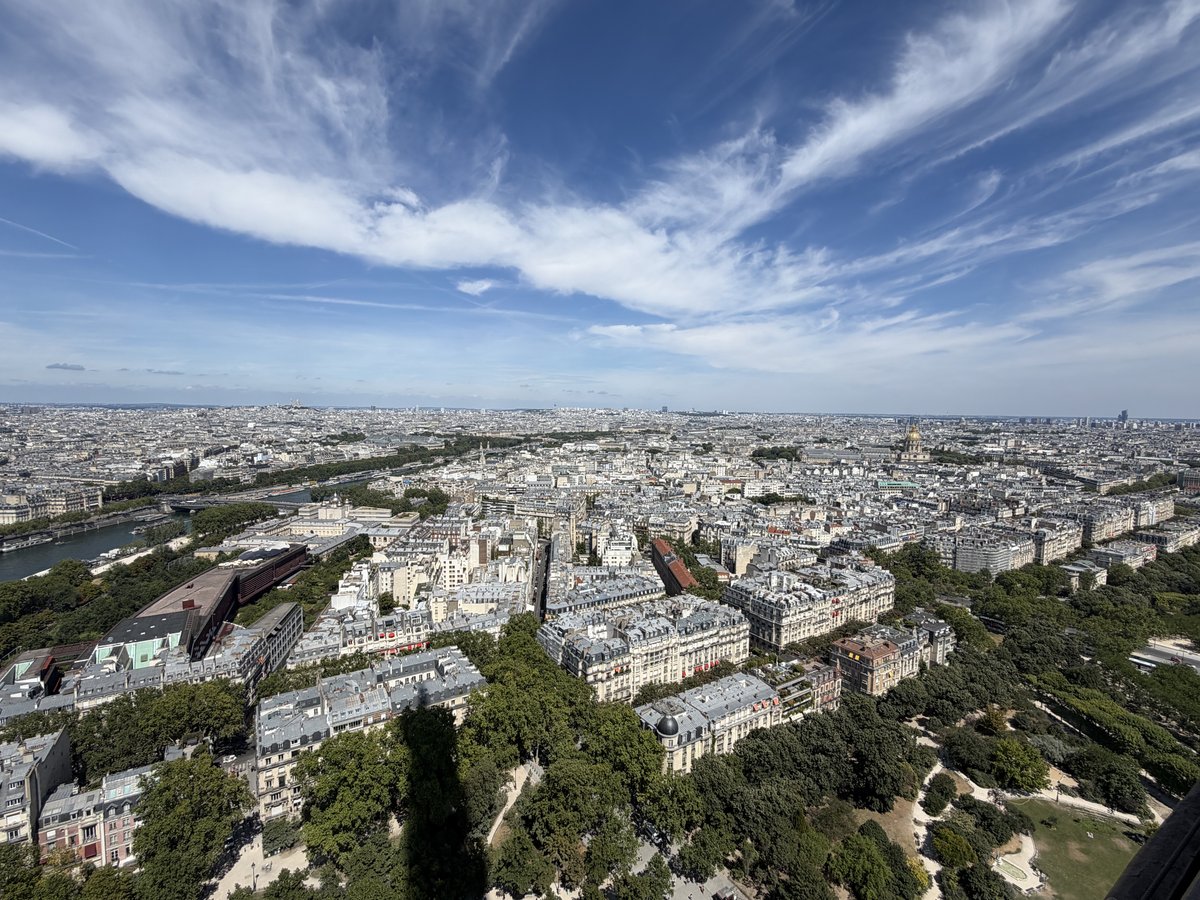
Then Preston and I decided to climb it. You can only take the stairs as far as the second floor — it's the elevator above that — but that's still 674 steps, and on this particular afternoon, in the middle of the heatwave that shadowed most of our trip, those 674 steps were a real test of endurance. We earned every meter of that view. From the second level, on a cloudless day, the whole city fans out beneath you, and it was a perfect spot to get pictures.
 A word about the tower itself, because its story is better than most people realize. It was built as the centerpiece of the 1889 Exposition Universelle — the World's Fair marking the centennial of the French Revolution — and designed by engineers working for Gustave Eiffel's company, who bought the rights and staked much of his own money on it. It went up in a little over two years and opened in 1889 at 300 meters tall, making it by far the tallest man-made structure on earth, a title it held for 41 years until the Chrysler Building overtook it in 1930. Here's the kicker: it was only ever meant to be temporary. The permit ran for twenty years, and it was scheduled to be torn down in 1909. What saved it was the antenna on top — Eiffel had it wired for radio experiments, and once the military realized how useful a 300-meter transmitter was, the tower became too valuable to demolish. The most iconic structure in France survives because it turned out to be a great radio mast.
By evening we'd worked our way down around the Champ de Mars, the long green park stretching out from the base of the tower, and it was time to make good on my promise of a real dinner. The neighborhoods around here are packed with places to eat, and honestly the abundance is its own problem — narrowing it down is not an easy task. We landed on Gusto Italia Amélie, a tiny Italian trattoria tucked onto rue Amélie in the 7th, just off the market street of rue Cler between the Invalides and the tower. It seats maybe sixteen people, so it's an intimate, family-run kind of place, and it was excellent — fresh pastas, proper pizzas, the whole thing done with care. Not French, granted, but a wholehearted upgrade over lunch, and exactly the kind of small, unfussy, genuinely good meal that makes a travel day feel complete.
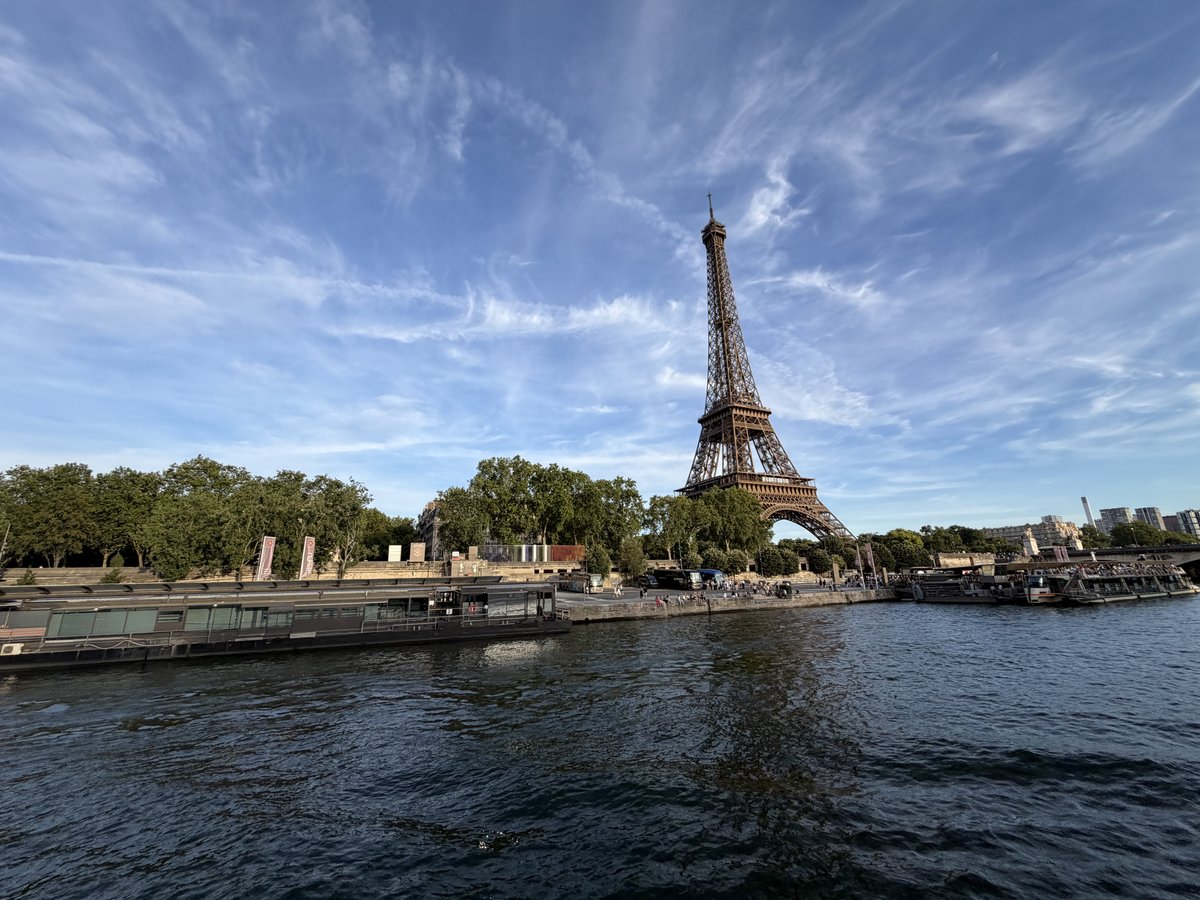
Dinner done, we made our way back to the river for the part of the day I'd most been looking forward to: an evening cruise on the Seine with Bateaux Parisiens. The boat pushes off from the foot of the Eiffel Tower, and over the next hour or so it carries you on a slow, narrated loop through the historic heart of the city, with the great monuments sliding past on both banks in the low evening light.
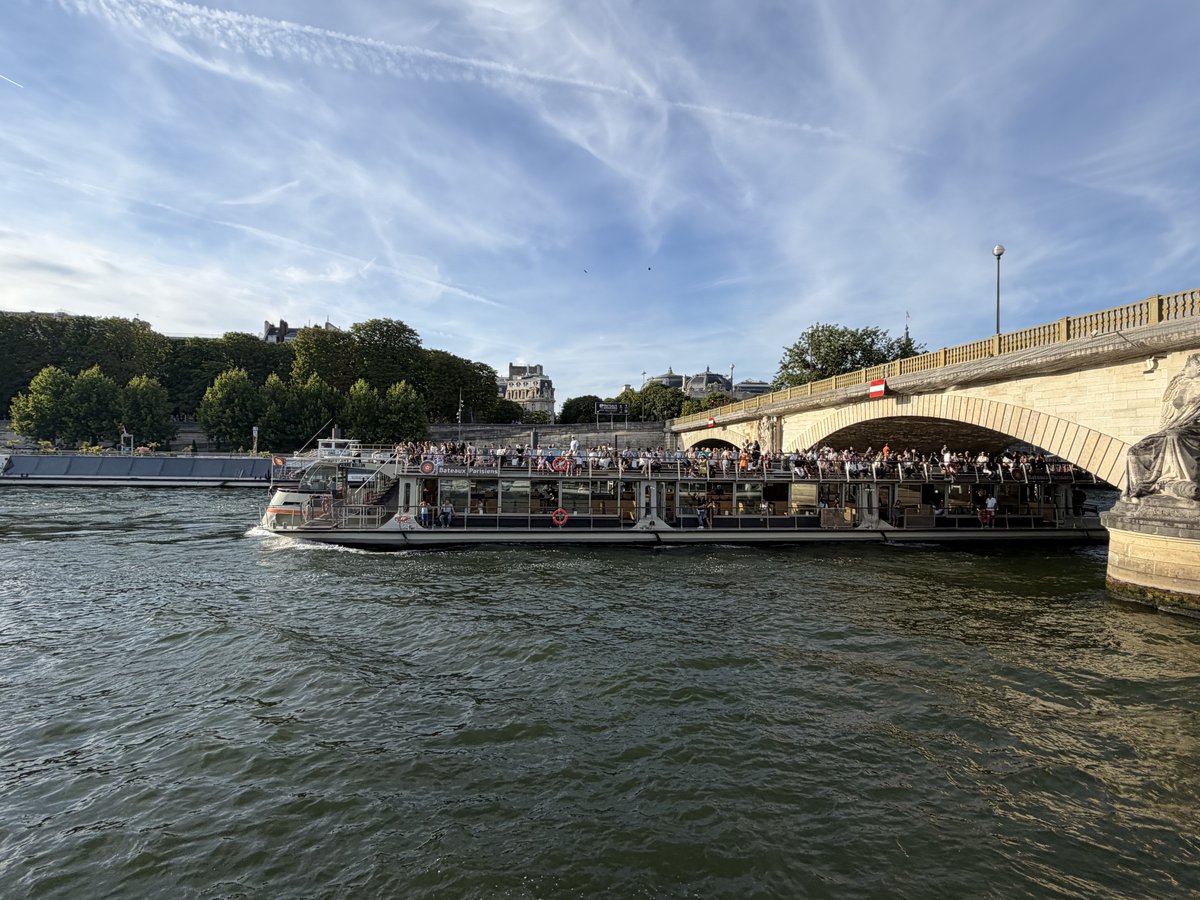 It's a remarkable way to see Paris. We set off with the tower itself glowing behind us and drifted first past Les Invalides, with its golden dome housing Napoleon's tomb, then the Assemblée Nationale, the seat of French democracy, and the Musée d'Orsay, the former railway station that's now home to the world's great collection of Impressionist art. The Institut de France and its dome slipped by, and then the boat rounded onto the Île de la Cité and the real showstopper came into view: Notre-Dame, the medieval soul of the city, rising over the water. Just past it came the ornate Hôtel de Ville, the city hall, and then the pointed medieval towers of the Conciergerie, once a royal palace and later a revolutionary prison. Onward past the vast wings of the Louvre, the Place de la Concorde with its Egyptian obelisk, the glass-roofed Grand Palais, and a final wave from the Arc de Triomphe off in the distance, before the cruise closed the loop back at the Palais de Chaillot — the same Trocadéro esplanade where we'd caught our first breathless look at the tower a few hours earlier. Seeing all of it strung together from the water, in one hour, in that light, is the kind of thing that reorders your mental map of a city.
We walked around a while longer after the boat let us off, reluctant to end the day, before finally heading back to the hotel.
And here's where I'll put in a good word for Le Milie Rose, because it was a highlight. A beautiful, clean, well-appointed little boutique hotel — everything the Sequoia Lodge room hadn't been. The rooms run on the smaller side, which turned out to be a feature rather than a bug: rather than cram all three of us into one room, we booked two, which meant Preston got a room of his own. For a sixteen-year-old on a family trip, his own room in Paris was probably the highlight of the entire trip, and I can't blame him. The streets around the hotel were quiet and unremarkable during the day, but at night the neighborhood transformed — the cafés filled up and spilled onto the sidewalks, mostly with younger people out enjoying the evening, and the whole area came alive. A great little corner of the city to call home base.
Day Two: Cathedrals, stained glass, and the Louvre
We started the second day at Notre-Dame, aiming for the 9 a.m. opening. We hadn't made reservations, but at that hour it wasn't a problem — we walked right in. One thing worth knowing if you go: dress appropriately. It's a working, functioning church, not just a tourist site, and it deserves to be treated as one.
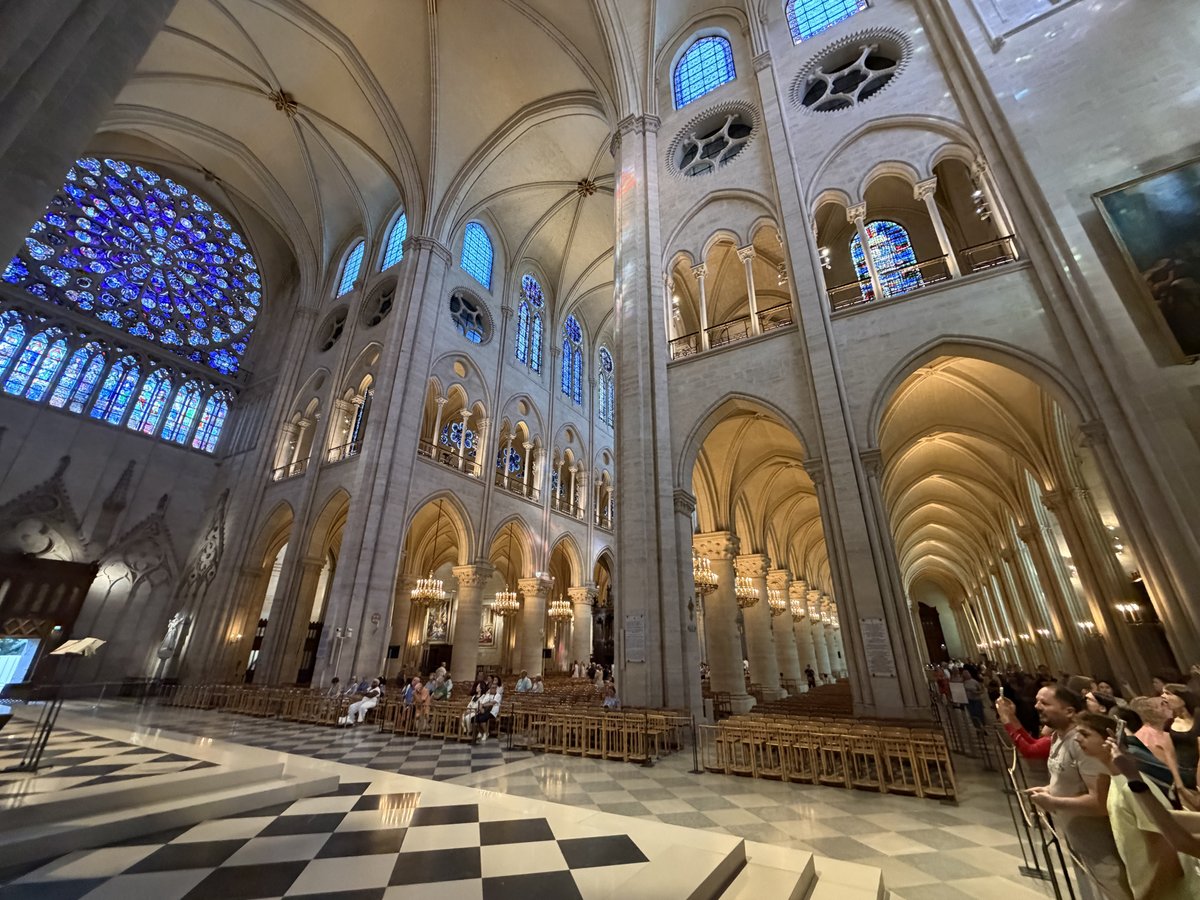 Walking into the cathedral is a breathtaking experience — there is detail everywhere you look, in every direction, up and down. And there's an extra layer to seeing it now, because this is a Notre-Dame that very nearly wasn't. The cathedral has stood on the Île de la Cité since construction began in 1163 under Bishop Maurice de Sully, taking the better part of two centuries to complete, and it's a landmark of Gothic architecture — one of the first buildings to use the flying buttress, famous for its rose windows and its twin west towers, immortalized by Victor Hugo. Then, in April 2019, the world watched it burn: a catastrophic fire brought down the spire and consumed the entire wooden roof structure. It took five years and an extraordinary restoration effort to bring it back, and it only reopened to the public in December 2024 — barely eighteen months before we walked through the doors. The interior stonework has been cleaned to a pale, luminous brightness that most people alive have never seen it wear. To stand inside it now, restored and reopened, is to see something that a lot of people feared was gone for good.
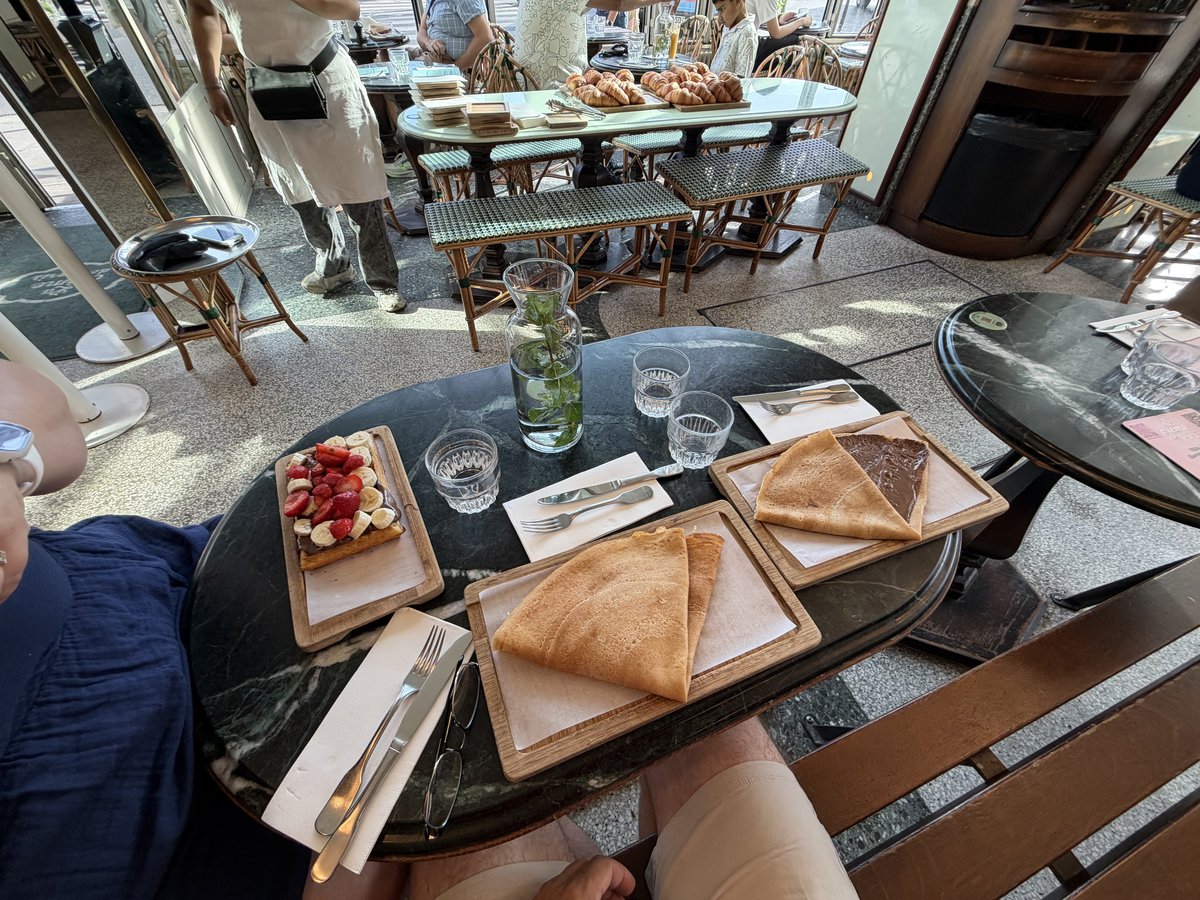 Afterward we grabbed breakfast at La Crème de Paris Notre-Dame, a busy little corner café just across the river from the cathedral. Half the experience was the food and half was the show — sitting there with a coffee, watching the barely-controlled chaos of a Paris morning unfold on the streets right in front of us. That's a meal you remember as much for the seat as the plate.
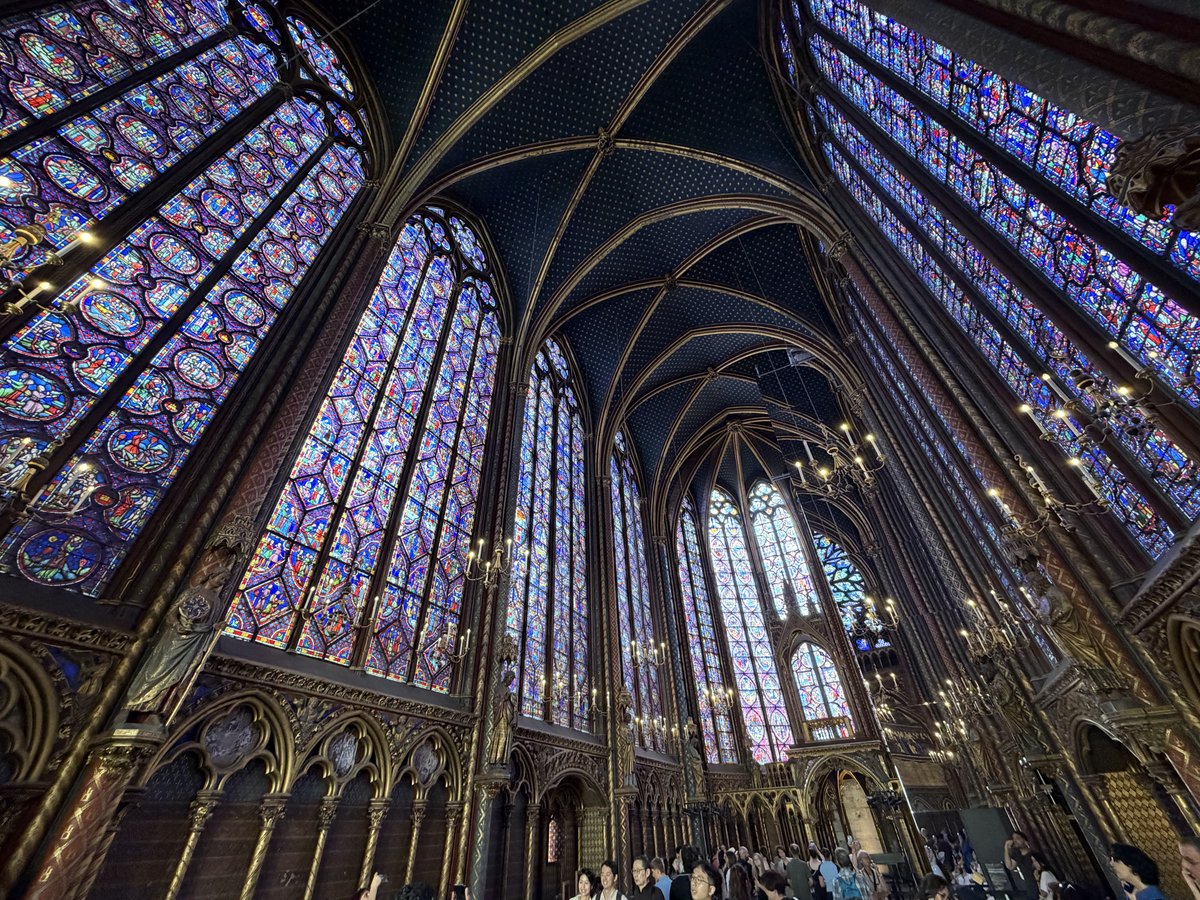 From there it was a short walk to Sainte-Chapelle, and if Notre-Dame is about grandeur, Sainte-Chapelle is about light. It's a royal chapel, built astonishingly fast — between roughly 1238 and 1248 — by King Louis IX, the king later canonized as Saint Louis, for a very specific purpose: to house the sacred relics of the Passion that he had acquired at enormous expense, including what was venerated as Christ's Crown of Thorns. The building is essentially a jewel box. The upper chapel's walls are barely walls at all; they're fifteen soaring stained-glass windows, each some fifty feet tall, filled with over a thousand individual scenes and wrapping the entire room top to bottom and all the way around. The stained glass in this place is beyond words. You walk in and your neck just tilts back and stays there. Of everything we saw in two days, this was the one that left us the most quietly stunned.
Then we walked over to the Louvre, where we had a timed entry, and stepped into the largest art museum on earth. It began life as a medieval fortress in the late 1100s, grew over the centuries into the principal royal palace, and was opened to the public as a museum in 1793, at the height of the Revolution; I. M. Pei's glass Pyramid, now the main entrance, was added in 1989 and has become as much a symbol of the place as anything inside it. We did our best to cover pretty much all of it, and we saw the major works — the Mona Lisa behind her crowd and her glass, the armless Venus de Milo, the Winged Victory of Samothrace poised at the top of her staircase, Delacroix's Liberty Leading the People. It is a staggering collection.
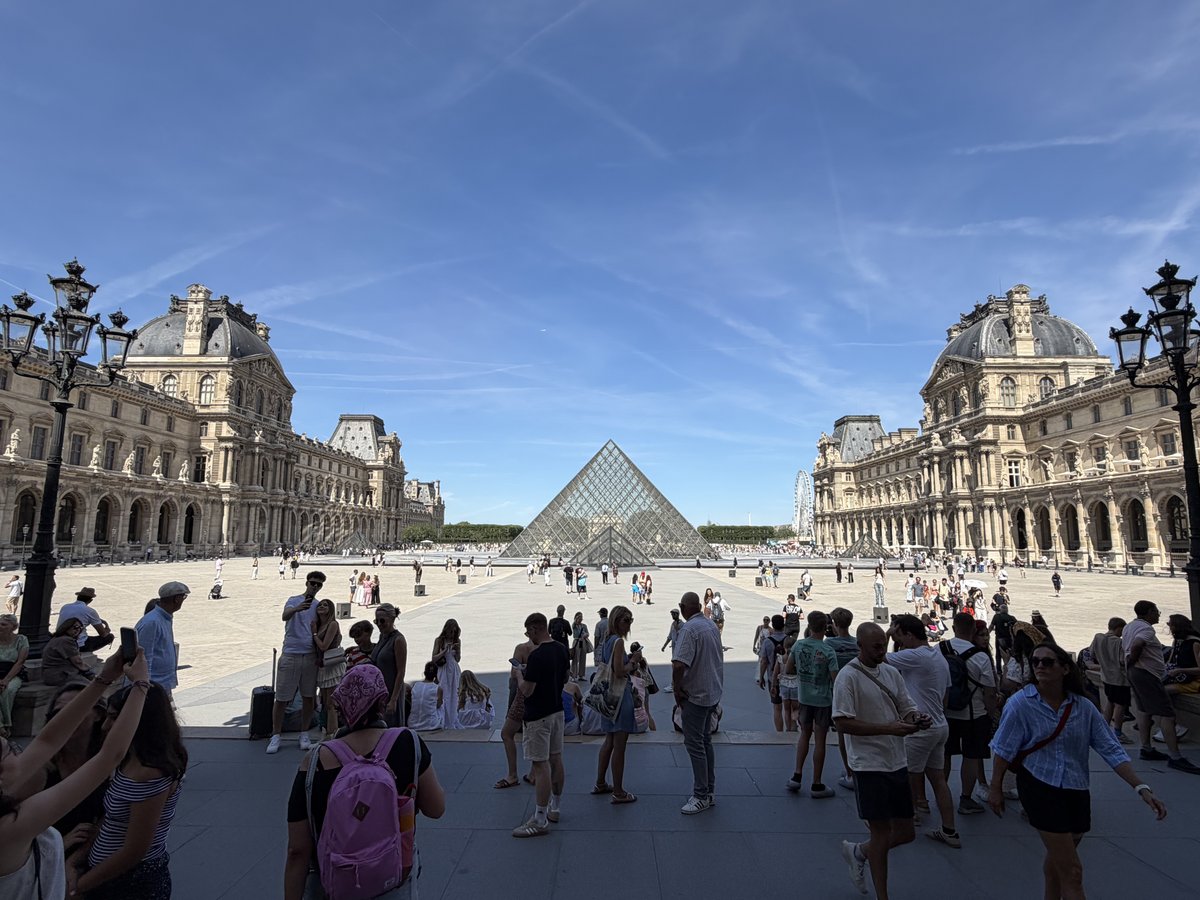 It was also, on this day, staggeringly hot — the heatwave again — and staggeringly crowded. I don't think I have ever seen a museum with quite so many people packed into it. Moving through the galleries was less strolling and more shuffling with the tide. Still, you don't skip the Louvre because it's busy; you just accept that you're sharing the Mona Lisa with a few thousand of your closest friends.
When we'd had our fill, we hit the Louvre's excellent gift shops and the food court attached directly to the museum, and then it was time to go. We made our way back to the hotel, collected our bags, and headed for the station to catch our train — because our next stop wasn't in France at all. We were bound for Rust, Germany, and the roller coasters of Europa-Park.
Final thoughts
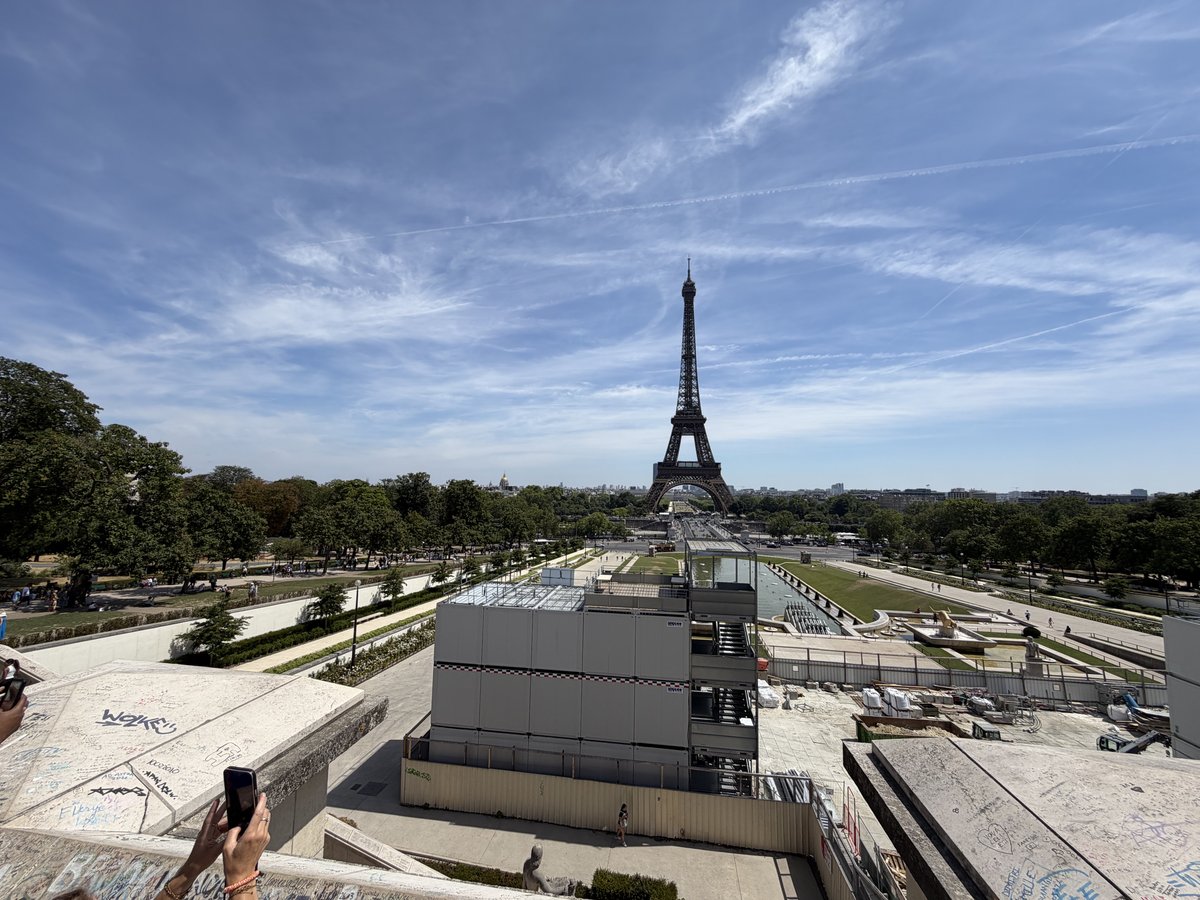 Two days is nowhere near enough for Paris, and everyone who goes knows it going in. But you can do a lot with two days if you let the city set the pace — a slow climb up the Champs-Élysées to the Arc, that gut-punch first view of the Eiffel Tower from Trocadéro, an evening drifting past every monument that matters from the deck of a boat, a restored cathedral in the morning light, a chapel made entirely of colored glass, and the greatest museum in the world to finish. We ate one meal we shouldn't have and several we should have, Preston got his own room, and all three of us came away with the particular tired-but-full feeling that a great city gives you.
Paris delivered. Now for something completely different — and considerably faster.