2026-04-25
Saturday Afternoon in Bristol
Bristol, TN, United States
Preston had been working all year toward AGLOA Nationals — the annual Academic Games Leagues of America championship held in Charlotte — and that's where he was for this particular weekend, competing with his team. With him taken care of and out of town, Catrina and I decided to use the empty weekend on a short getaway of our own. The destination came together pretty easily: I'd been wanting to check out Borderline Billiards in Bristol for a while, the drive from Weirton was reasonable, and the hotel attached to one of the better BBQ restaurants in town happened to be sitting right in the middle of downtown. Easy call.
Arrival: The Sessions Hotel
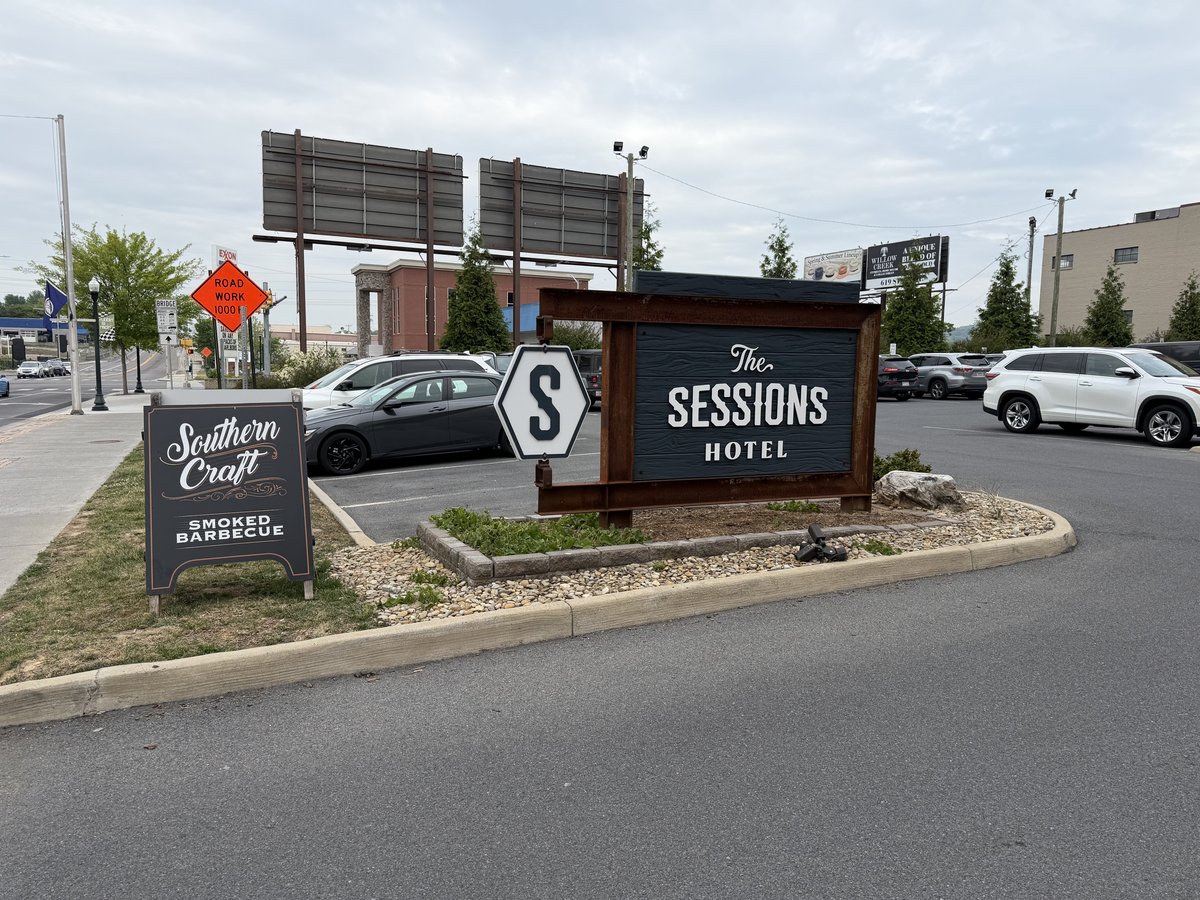 We rolled into Bristol on Friday night and checked into The Sessions Hotel on State Street. Sessions is a Marriott Tribute Portfolio property that opened in June 2020, and it might be one of the more thoughtfully designed boutique hotels in the region. The building isn't a building — it's three buildings, all carefully repurposed: the 1915 Bristol Grocery Building, the 1920 Jobbers Candy Factory, and the 1922 Simply Grand Granary Mill. Some of the rooms are literally inside restored grain silos.
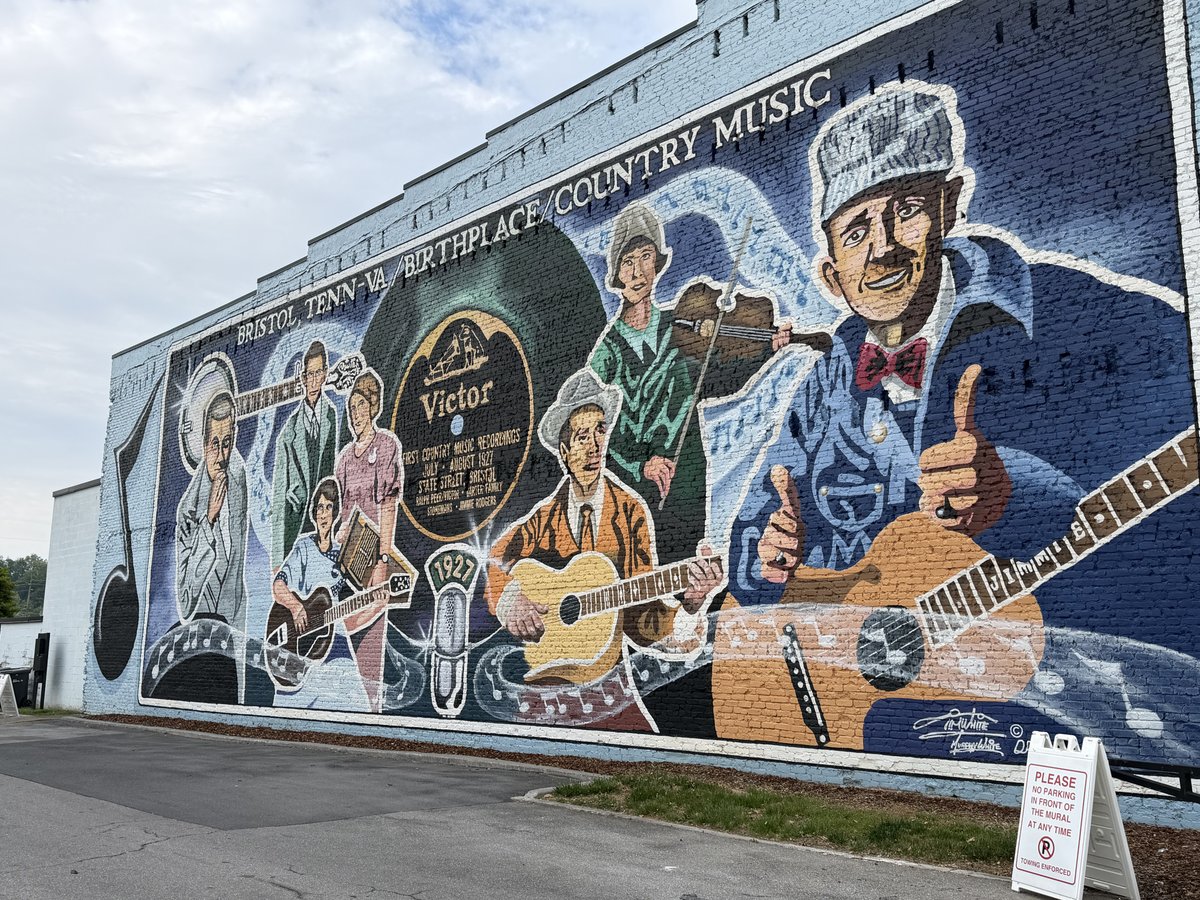
The whole hotel is a love letter to the 1927 Bristol Sessions — the recording sessions that gave Bristol its title as the Birthplace of Country Music. Ralph Peer, working for the Victor Talking Machine Company, brought portable recording equipment to a temporary studio on State Street in the summer of 1927 and over a couple of weeks recorded a slate of Appalachian musicians, including the Carter Family and Jimmie Rodgers. Those recordings are now broadly considered the "big bang" of country music as a commercial genre, which is why Bristol gets the designation — and why every detail of this hotel leans into the story. There are 70 guest rooms, each named after one of the 76 songs recorded during the Sessions. Each room has a record player. The lobby has a box of vinyl you can borrow. Hallway carpets are designed to look like guitar strings. Room signage is shaped like records. Exposed brick, original beams, restored sliding warehouse doors, and old industrial pulleys are all left visible.
After a long drive, the room was a soft place to land.
Saturday: a slow start, then State Street
We slept in. That was the entire morning plan, and we executed it well.
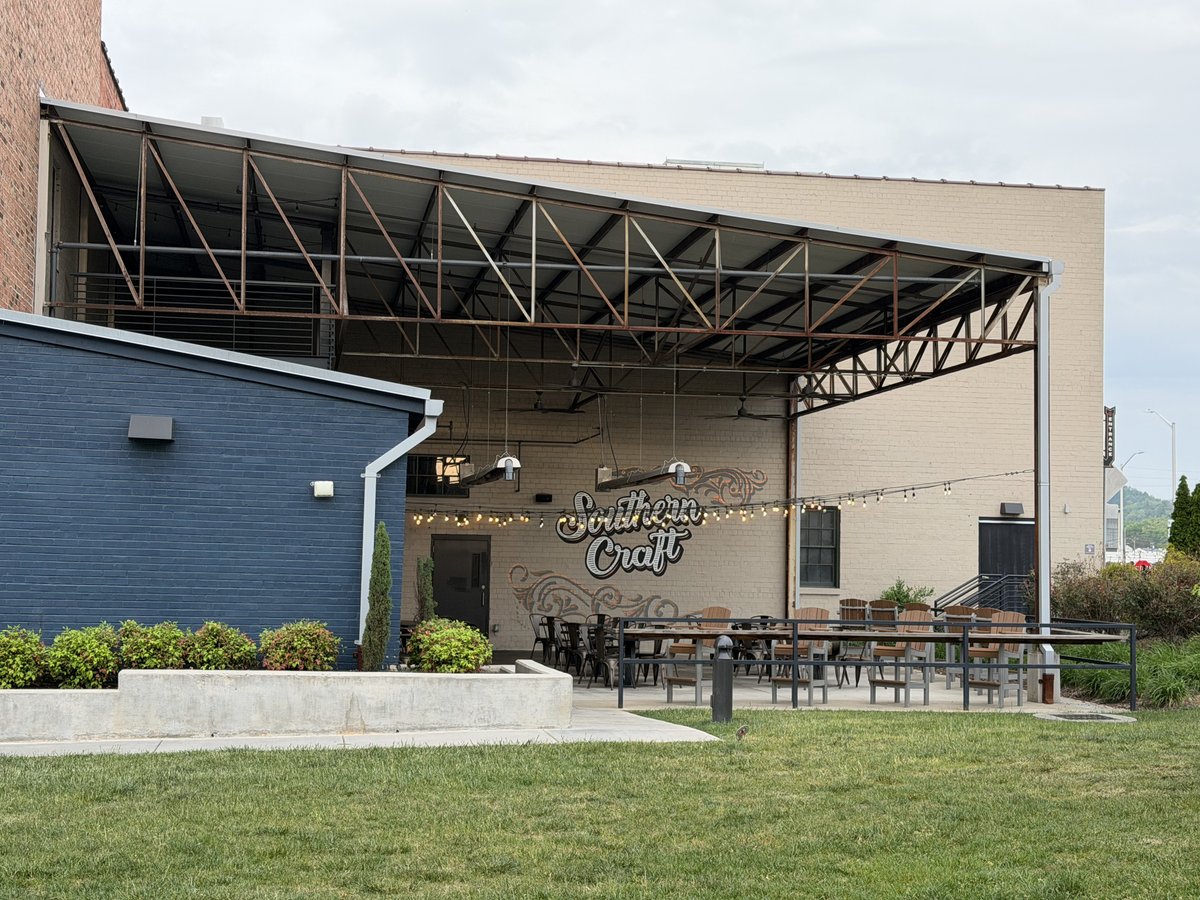 For lunch we walked next door to Southern Craft, the wood-fired BBQ restaurant inside the Sessions complex. It's the hotel's main dining room and it has a real reputation locally — award-winning, full smokehouse menu, the kind of place that feels like it could anchor a downtown by itself. Our impression was: solid. Not out of this world, but a perfectly good lunch. Decent BBQ, fine sides, no complaints. Convenient enough that we were back out the door and on State Street within an hour.
State Street: one street, two states
State Street is the whole thing in Bristol. It's a five-block downtown commercial corridor, and the center line of the road is literally the Tennessee/Virginia state line. That's not a marketing exaggeration — it's an actual federal designation. The U.S. Congress officially designated the centerline of what was then called Main Street as the boundary between Tennessee and Virginia back in 1901, and the cities renamed it State Street to make the point.
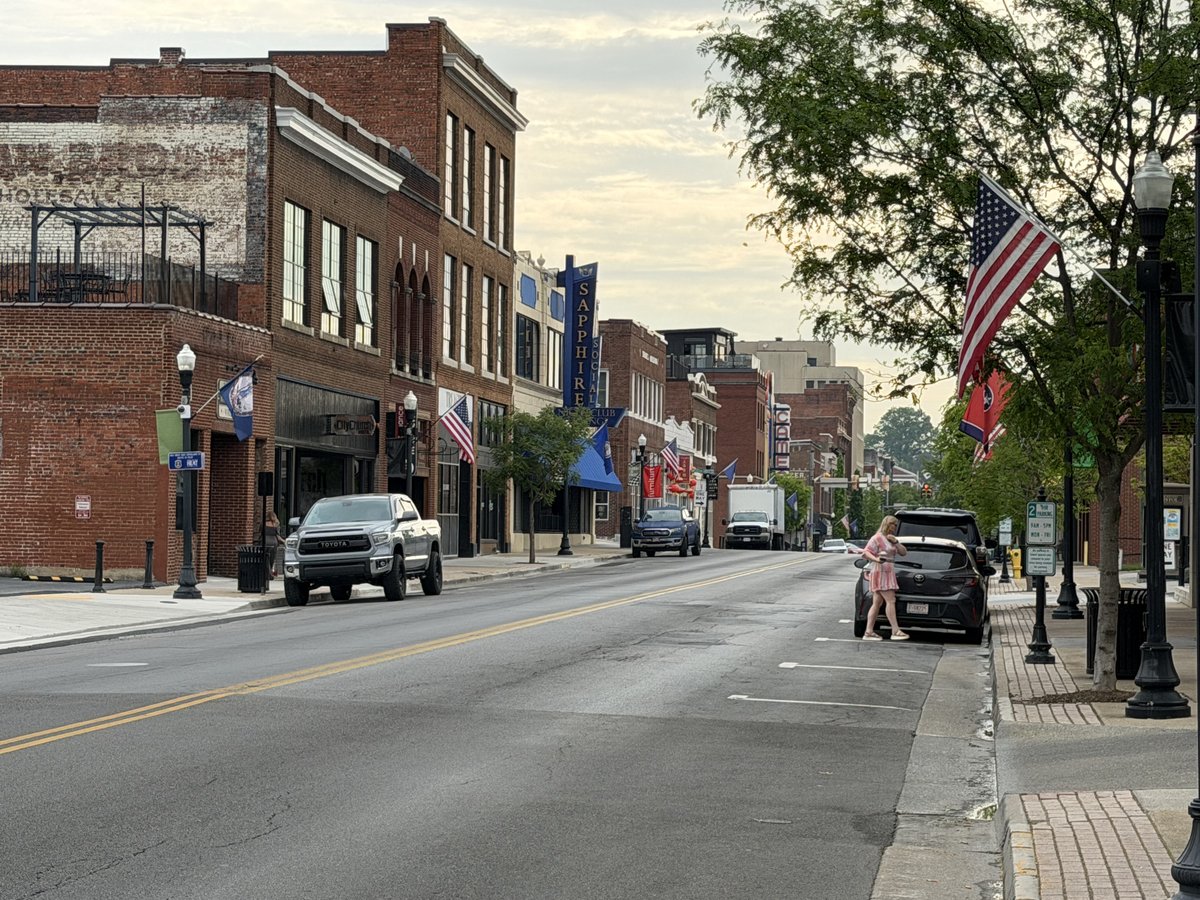 The result is a downtown that operates as a single neighborhood split between two municipalities, two state governments, and (notably) two different sales tax regimes. Stand on the south side of the street, you're in Bristol, Tennessee, in Sullivan County, and there's no state income tax. Walk across the road, and you're in Bristol, Virginia, an independent city, and the rules quietly change. The two Bristols still have separate mayors, separate city councils, separate police departments, and even separate high schools (Tennessee High vs. Virginia High). They share a wastewater plant and the downtown.
A few things you can't miss while walking it:
- The brass state line markers embedded in the pavement between roughly the 400 and 800 blocks of State Street, inscribed "Tennessee" on the south side and "Virginia" on the north. People stop in the middle of the street to take photos with one foot in each state. (The locals are used to it and generally indulgent about traffic.)
- The Bristol Sign — the giant illuminated arch sign that spans State Street with the slogan "Bristol VA-TN: A Good Place to Live." It was first put up in 1910 (originally reading "PUSH! THAT'S BRISTOL!" — they changed the slogan in 1921 after winning a contest, partly because when bulbs burned out, the old sign occasionally read things it wasn't supposed to read). The current sign was moved to its current location in 1915 and has been a National Register of Historic Places landmark since 1988. About 1,330 bulbs.
- The general fabric of the street: art galleries, antique shops, bars, music venues, the Paramount Center for the Arts (a 1931 Art Deco theater), and the Birthplace of Country Music Museum, all packed into about five walkable blocks.
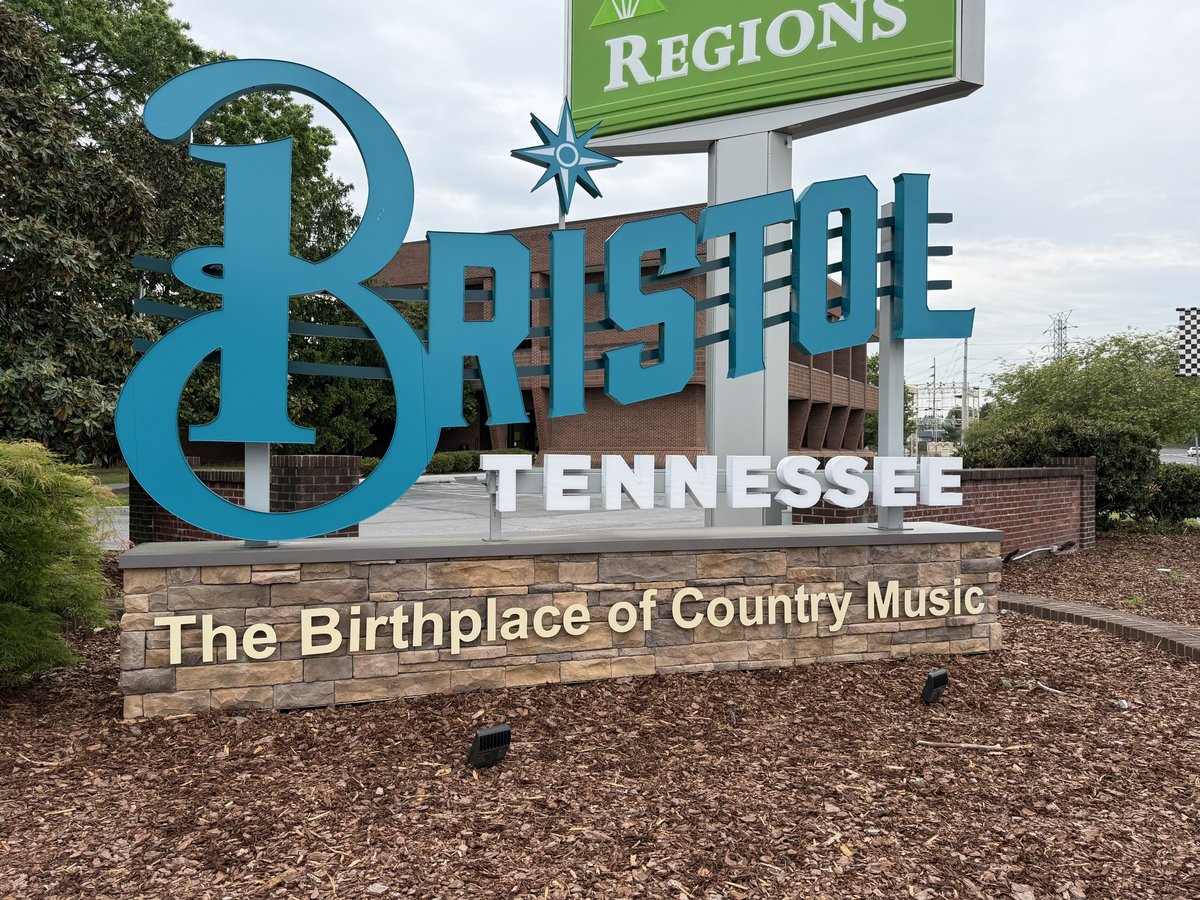 We didn't try to do everything — just strolled and let things catch our eye.
Cheap Thrills Records
First stop was Cheap Thrills Records at 507 State Street, on the Virginia side across from the Paramount. Cheap Thrills has been a going concern since 1995 — originally based in Beckley, West Virginia, with another location in Princeton, WV, and they relocated the Beckley operation to Bristol in 2022. So while it's a relatively new arrival to State Street, it's a 30-year-old shop in spirit.
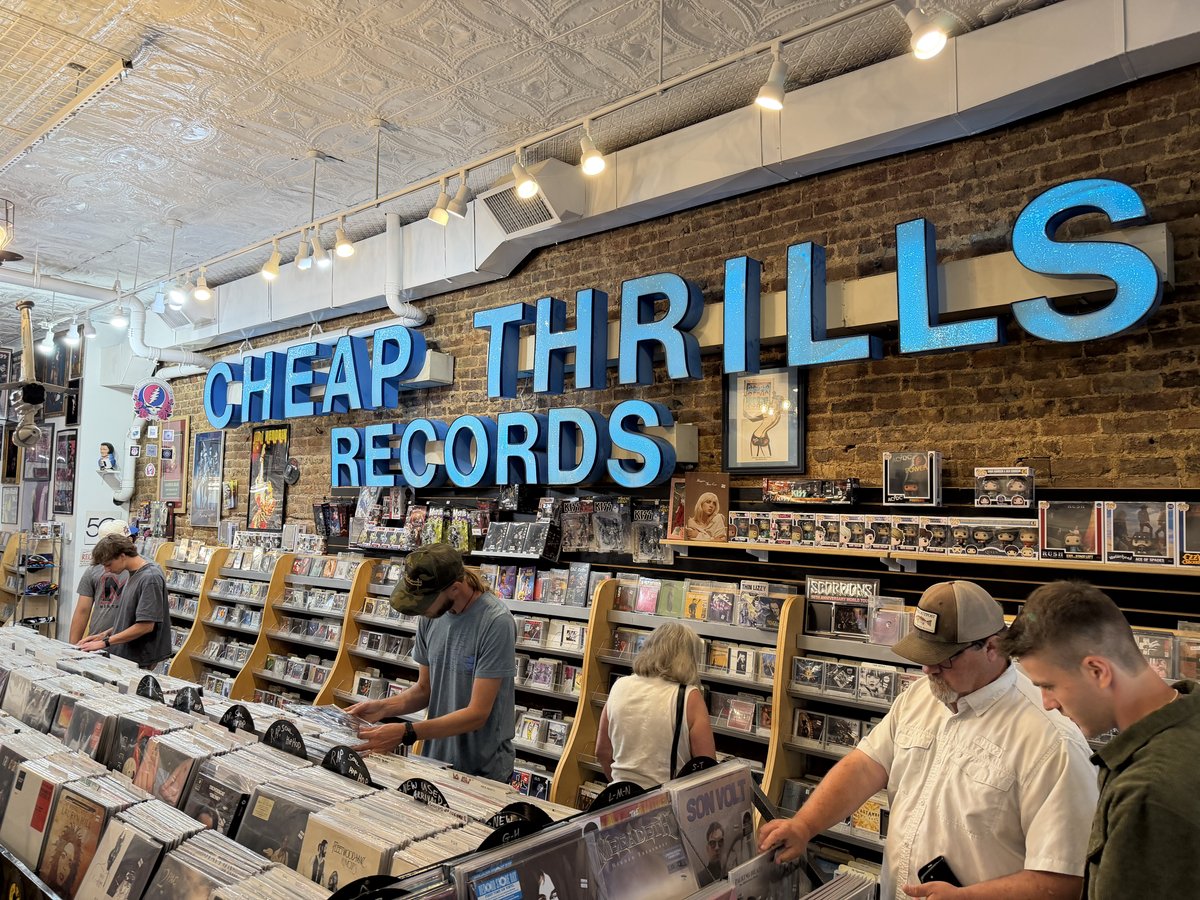 It's exactly what a good independent record store should be: well-organized racks, fair prices, a knowledgeable staff that's friendly without being pushy, and a mix of new releases and used vinyl that rewards just digging around. They carry CDs, t-shirts, posters, stickers, collectibles, the usual record-store extras. We spent more time in there than we'd planned to, which is the sign of a good record store.
Antique malls
The other thing State Street has in abundance is antiques. There are several large antique malls running down State Street, the kind where one storefront contains dozens of individual vendor booths and you can lose an hour just walking the aisles. Furniture, vintage signs, glassware, military gear, vinyl, old toys, books, kitschy collectibles, the occasional genuinely cool thing buried under three layers of less-cool things. Catrina is good at antiquing and I'm good at letting Catrina antique, so this was a comfortable rhythm.
These malls are a big part of why a Bristol weekend is doable as a low-key trip — you can fill a couple of hours just casually browsing, no agenda, no admission fee.
The Burger Bar
Just off State Street, on Piedmont Avenue, sits the Burger Bar — a tiny classic diner that opened in 1942 (originally called the Snack King) and has survived in more or less the same form ever since. Today,** it's owned by Joe and Kayla Deel, and from the outside it looks like a perfectly nice little burger joint. Which it is. But the reason people make pilgrimages to it from all over the world has nothing to do with the burgers and everything to do with one night in 1952.
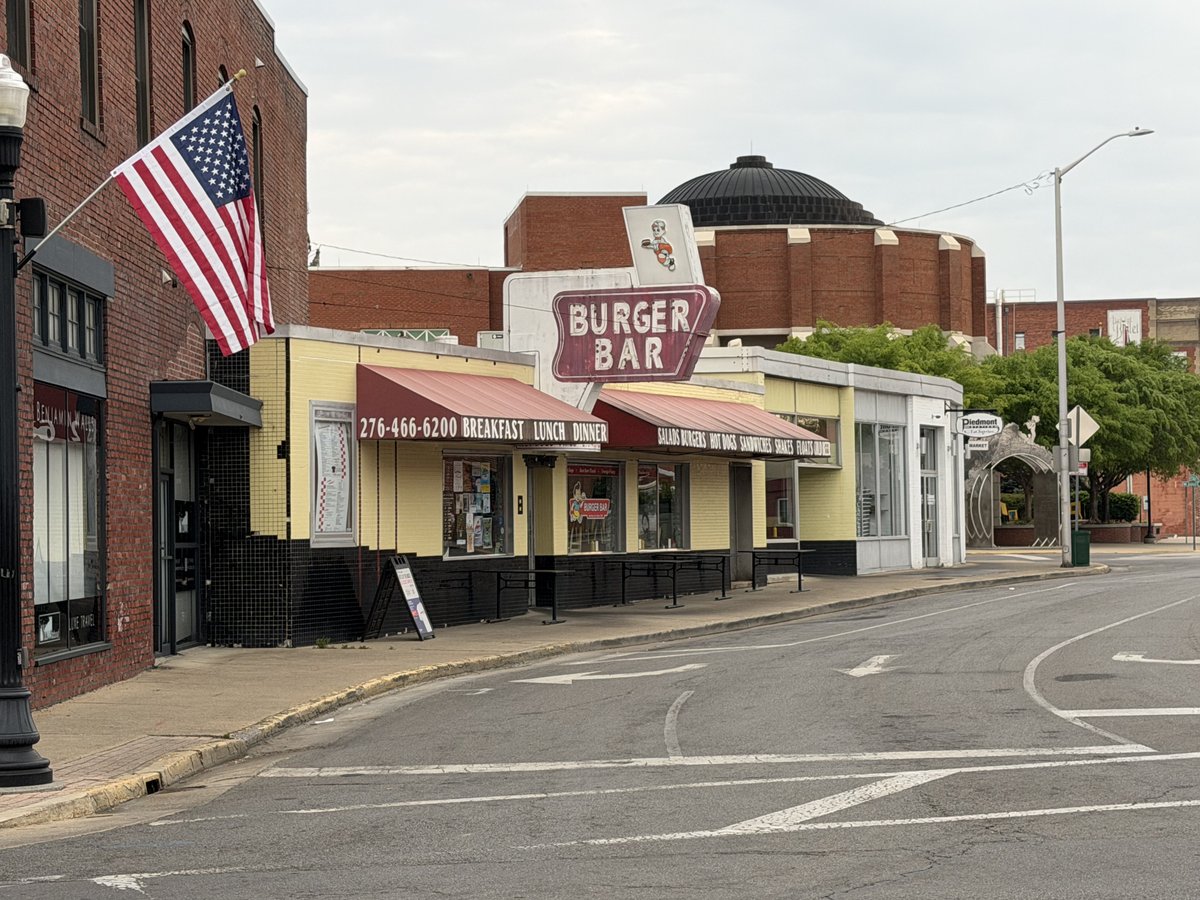 On the night of December 30, 1952, Hank Williams was being driven from Knoxville, Tennessee toward a New Year's gig farther north. He was 29 years old, in catastrophic health — surviving on alcohol, morphine, chloral hydrate, and B12 injections — and laid out in the back seat of a powder-blue Cadillac, wrapped in a blanket. His driver was a college freshman named Charles Carr.
Around midnight, Carr pulled into downtown Bristol to get gas and to look for a relief driver. Next to the cab stand was the Burger Bar. Carr asked Hank if he wanted anything to eat. Hank said no — he just wanted to sleep. They drove on. A few hours later, in Oak Hill, West Virginia, Carr reached into the back seat to check on him and found him cold. Hank Williams was officially pronounced dead just before daybreak on January 1, 1953.
The Burger Bar has been the last place Hank Williams was seen alive ever since. The diner leans into the story — the burgers on the menu are all named after Hank's songs (the "Howlin' at the Moon," the "Cold, Cold Heart," the "I Can't Help It"), and the walls are covered in photos and clippings. There's some debate among Hank scholars about whether Bristol was actually the very last stop or whether he might have technically still been alive at one or two points after, but the Burger Bar is where the most-cited version of the story ends. Either way, this little diner is now a permanent footnote in country music history — fittingly, in a town that's already the Birthplace of Country Music.
We didn't eat — we'd already had Southern Craft for lunch — but we walked over to take a look. It's worth seeing in person. There's something quietly affecting about standing on the sidewalk of a small American diner and realizing that a 70-year-old country music legend's last conversation, more or less, happened right here.
The main event: Borderline Billiards
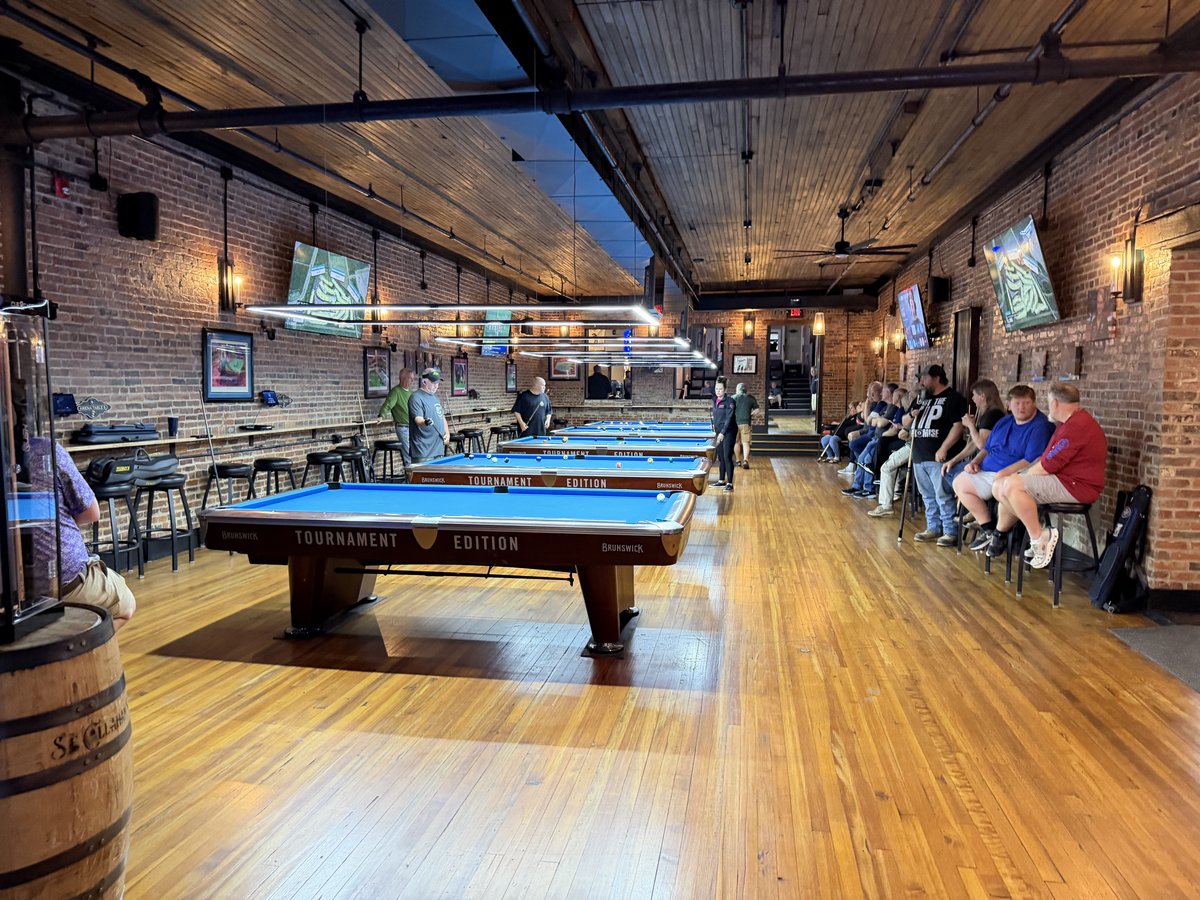
The real reason for the trip was Borderline Billiards, a couple of blocks away on the Tennessee side at 616 State Street. Borderline is owned and operated by Janet Atwell, a long-tenured WPBA professional who opened her first poolroom in Bristol in 2004 after turning pro. The current Borderline opened in early 2024 in a beautifully renovated historic building, partnering with Brunswick to add a 12,000-square-foot two-floor facility with the Brunswick Arena upstairs.
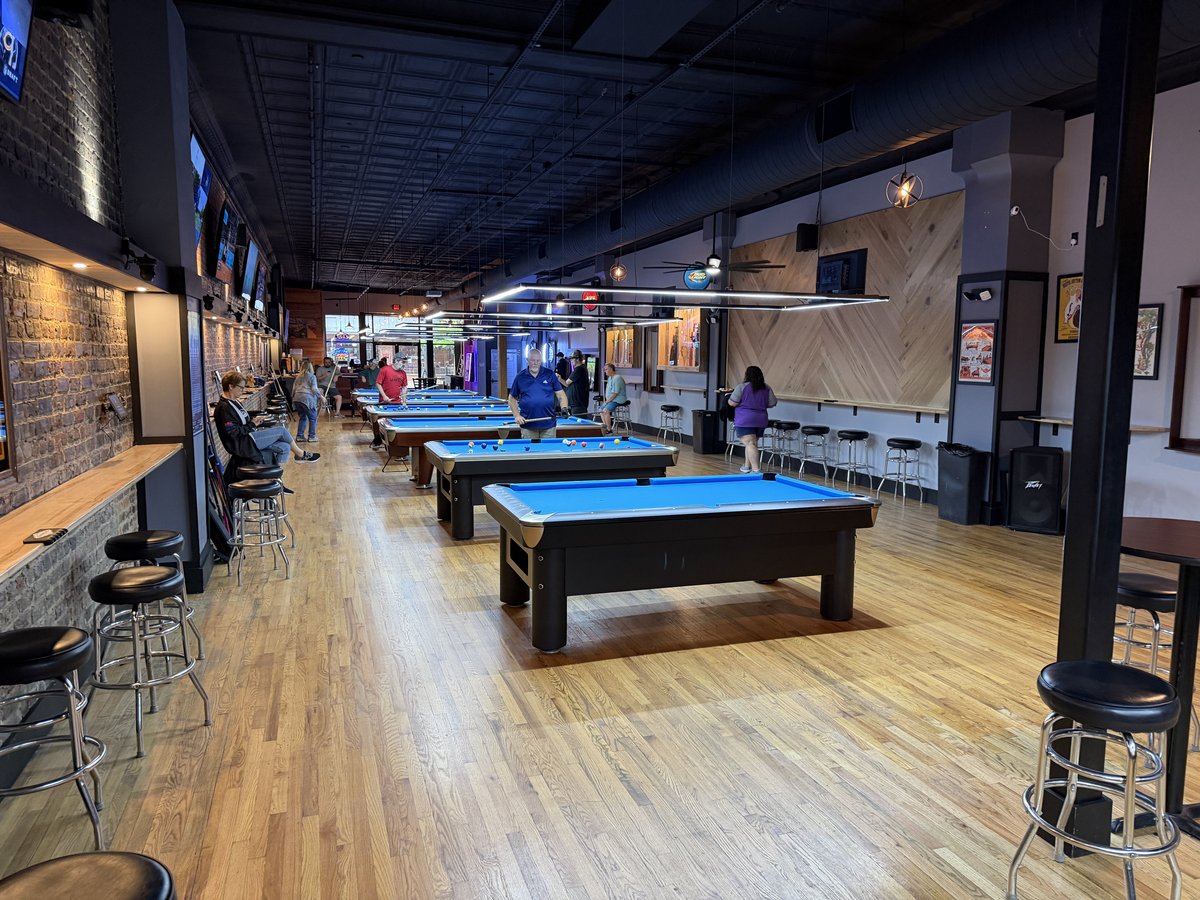 The setup is genuinely impressive. The downstairs floor has a mix of Brunswick Gold Crown VI 9-foot tables and Brunswick Gold Crown Coin 7-foot tables. The upstairs Brunswick Arena is built for pro and pro-am events, with arena-style spectator seating, live-stream cameras, monitors, and the kind of finish you'd expect from a venue designed to host major tournaments rather than just league night.
Catrina and I grabbed one of the 7-foot Brunswick tables — and not just any 7-footer. The one we played on was a feature table from an Ultimate Pool event, so we were essentially shooting on a piece of equipment that had been a centerpiece on a TV stream. That's not something you get in most pool halls. We shot for a couple of hours, ran some games, no pressure, no clock.
After we wrapped up, we headed upstairs to walk around the rest of the hall and check out the arena. Janet was around, and we had a chance to introduce ourselves and chat for a bit. I run Big Boy Tournaments, my pool promotion company, and the conversation naturally drifted toward what it would look like to bring a Big Boy event to Borderline at some point. The room is well-suited for it — the Brunswick Arena upstairs is essentially purpose-built for the kind of event we run, and Bristol's geographic position (right on the I-81 corridor between major southeastern markets) makes it an interesting venue from a draw perspective. Nothing locked in, but a real conversation, and one I'm planning to follow up on.
That alone made the trip worth the drive.
Final thoughts
Bristol is one of those towns that punches above its weight. You've got a thoughtfully restored boutique hotel that doubles as a country music history exhibit, a downtown street that's a literal state line, a respectable BBQ joint, an excellent independent record store, plenty of antique-mall browsing, and a serious pool hall run by a former tour pro that's making a real bid to host major events. Add the music heritage, the Paramount, the Birthplace of Country Music Museum, and you've got more weekend material than two people can finish in one go.
 We didn't get to everything. That's fine. Catrina and I both came away happy with the trip, with leads on a possible event venue, with some new records, and with the kind of relaxed pace that you don't get on a family trip. Preston was crushing it in Charlotte. We were eating BBQ in Bristol. Everybody won.
Worth coming back. Probably will, especially if a Big Boy event ends up here.