2026-03-30
An Evening Walk to the National Mall
Washington, District of Columbia, United States
After checking into the Eurostars St Gregory — situated at the intersection of Dupont Circle, the West End, and Georgetown — the evening plan was a walk south through the GW University campus and down to the National Mall to see it lit up at night. On the map it's a little under a mile and a half to the Lincoln Memorial, which is a very doable evening stroll. In practice, the route cuts through some of the most recognizable real estate in the city, even if most of it goes quietly unnoticed by visitors.
Through George Washington University
George Washington University's Foggy Bottom campus sits directly between the St Gregory and the National Mall, so any walk south essentially becomes a walk through GW. Founded in 1821 by an act of Congress and originally named Columbian College, it's one of the largest private universities in the country and one of the few that can reasonably claim an urban campus where the "campus" is really just a handful of city blocks in downtown Washington. The buildings aren't architecturally unified in the way an old quad-and-ivy campus is — it's more of a dense patchwork of classroom buildings, dorms, townhouses, and university offices woven into the existing street grid — but on a weeknight evening it's pleasant to walk through, with students moving around, lit windows, and a generally calmer atmosphere than the streets a few blocks east.
From GW it's a short walk across Constitution Avenue to the western edge of the Mall.
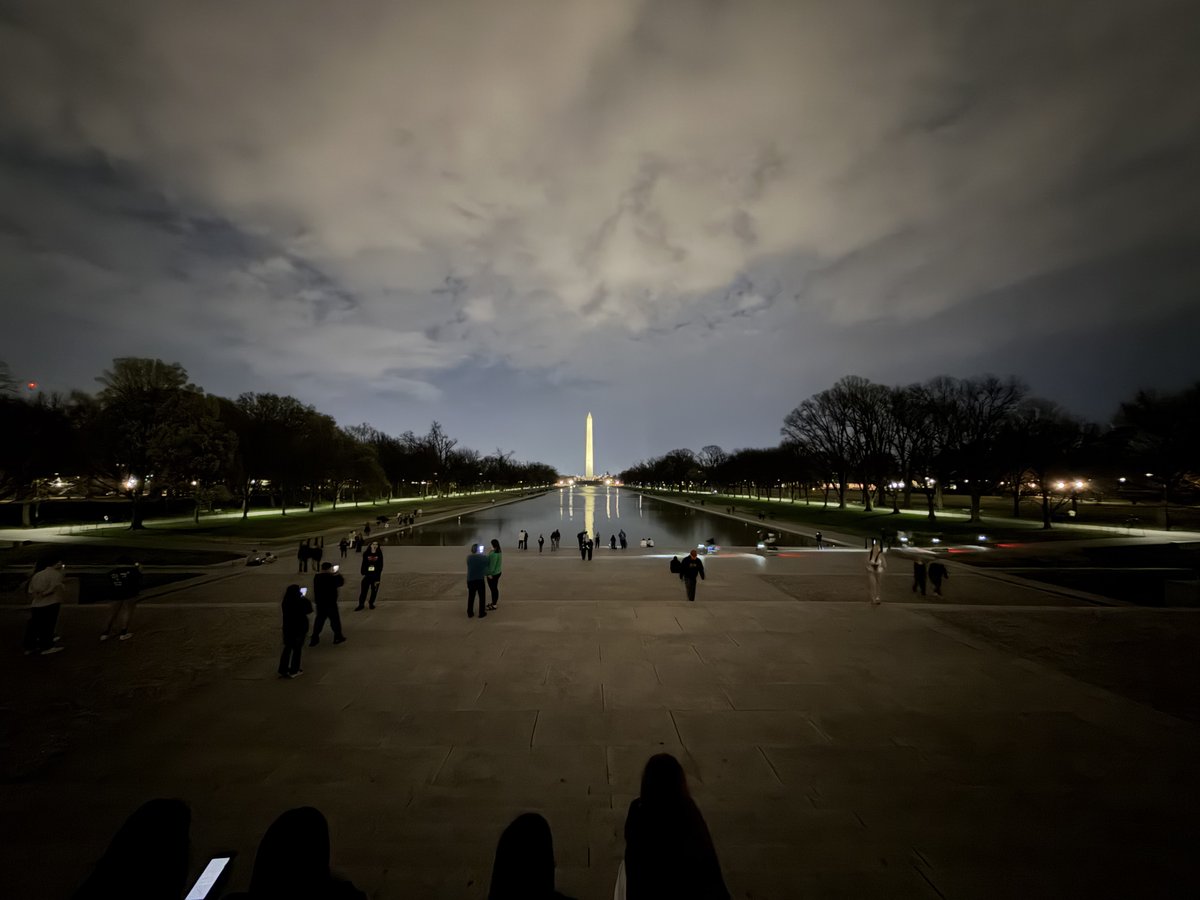
The National Mall at night, March 2026
The National Mall was clearly in transition — and not in a subtle way. With the 250th anniversary of American independence coming up on July 4, 2026, virtually every major site on the west end of the Mall is either under active renovation or fenced off in some form of construction prep. The phrase the National Park Service keeps using is the "semiquincentennial," which, yes, is the real word. The work is a coordinated push tied to Executive Order 14189, "Celebrating America's 250th Birthday," and a companion order aimed at physically sprucing up DC's public spaces before the wave of visitors arrives.
In practice, on an evening walk, this means a lot of chain-link fence, a lot of plywood, and a noticeable amount of "this isn't what you remember."
The Lincoln Memorial
The most visually jarring thing is the new accessible ramp on the side of the Lincoln Memorial — an industrial-looking structure of switchbacks bolted onto one side of the steps. It's genuinely ugly. It is also, apparently, the only viable way to keep the main chamber accessible to wheelchair users during the long-running project to renovate the undercroft below the memorial.
The underlying work is a $69 million rebuild of the forgotten three-story basement space — roughly 43,800 square feet of undercroft built in 1914 on concrete columns sunk 40 feet into the reclaimed Potomac floodplain — into a 15,000-square-foot interpretive museum with exhibits, an immersive theater, new restrooms, a larger bookstore, and a replacement for the old elevator, which is out of service during construction. The project was funded in part by a major donation from philanthropist David Rubenstein and has been in the works since around 2016. The target opening is July 2026 to coincide with the anniversary.
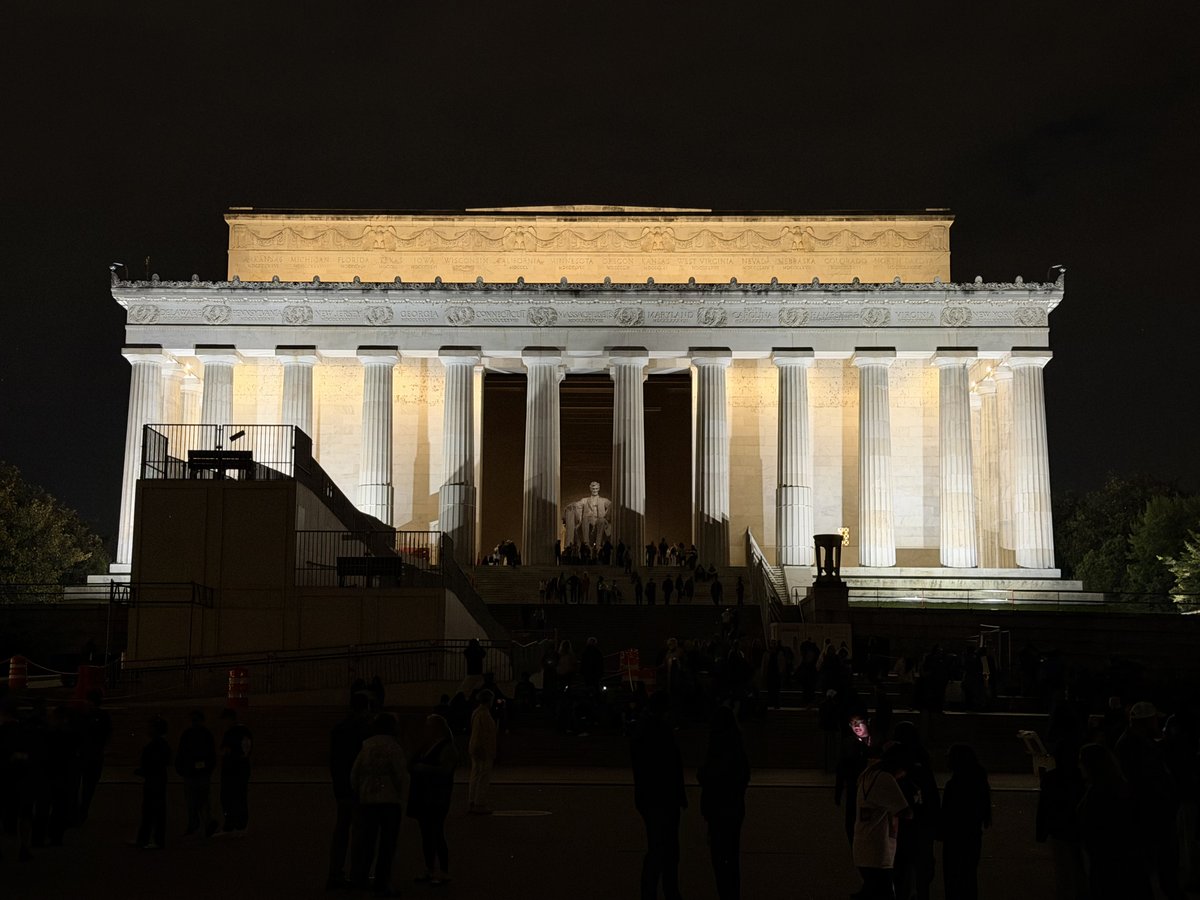 That's the why. The ramp is the how: since the elevator is down for the duration of the project, the NPS needed a temporary ADA-compliant path from the lower plaza up to the main chamber, and this is what they came up with. Critics have pointed out that it's asymmetrical, visually loud, and more or less impossible to ignore when approaching the memorial from the Reflecting Pool. Defenders point out that leaving America's most-visited monument inaccessible to wheelchair users for multiple years was not a realistic option, and that whatever this thing is, it's temporary. Both are right. It still looks bad.
The main chamber with Daniel Chester French's seated Lincoln remained open, and the 87 steps up the front of the memorial are still climbable. But the outer perimeter of the upper level was fenced off, which means you can't walk around to the side and frame the Washington Monument between the columns — one of the classic DC photos. Much of the ground-level perimeter is fenced off too, with construction equipment staged in what would otherwise be open plaza.
The World War II Memorial
A short walk east along the Reflecting Pool is the WWII Memorial, which as of this visit was fully closed — drained, dark, fenced, and clearly mid-renovation. The National Park Service shut it down on January 9, 2026 for a $3.7 million project to replace the fountain pumps, lighting, and associated electrical and mechanical infrastructure. The memorial opened in 2004, so this is the first major systems overhaul in its 22-year life. The reopening target is mid-May 2026, in time for Memorial Day.
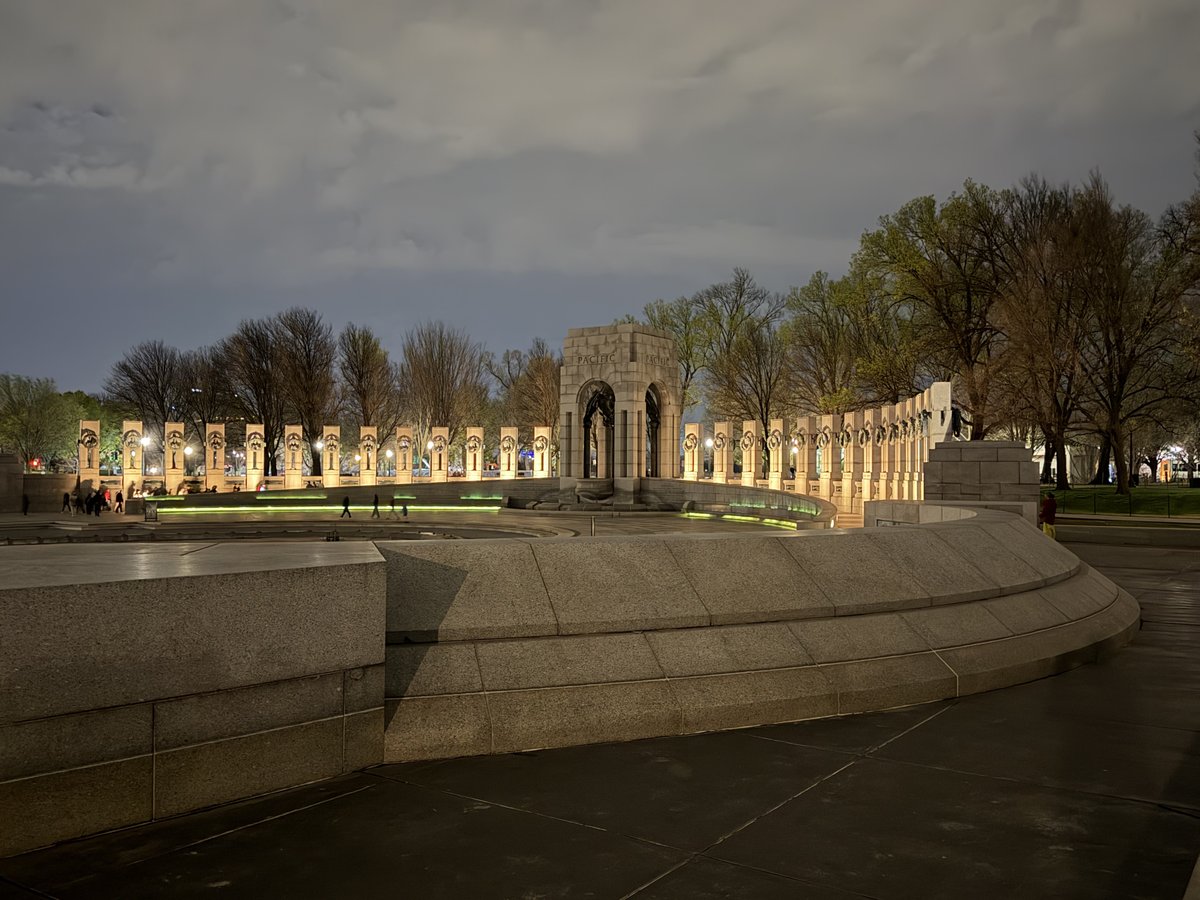 At night, with no water and no lighting, the memorial is a strange sight. The 56 granite pillars representing the states and territories are still there, the Atlantic and Pacific pavilions are still there, but the Rainbow Pool is a dry basin and the whole space feels more like a construction site than a memorial. Like the Lincoln work, this is officially part of the 250th anniversary prep — an effort to have the Mall's marquee sites looking and functioning their best in time for the July 4 events.
General state of the Mall
Beyond those two specific projects, the area was broadly in "getting ready for a big party" mode. Fencing, staging areas, signage about upcoming events, evidence of grounds work. The Great American State Fair is scheduled to take over a mile of the Mall between 4th and 14th streets from June 25 to July 10, 2026, with pavilions for all 56 states and territories, a 110-foot Ferris wheel, and a big July 4 fireworks show — so the visible disruption isn't just the memorial renovations, it's also the early prep for hosting millions of extra people. The overall impression was of a national landscape that had been pulled apart so it could be put back together in time for its own birthday.
One thing that didn't change: the tour crowds. Despite the hour, and despite the construction, there were a surprising number of people out — walking tours, Segway tours, pedicab tours, school groups, tourists on their own. The Mall at night is a genuinely popular experience, apparently even during an ugly-construction phase, and the business of showing people around the monuments after sunset was clearly going full tilt.
How much has changed
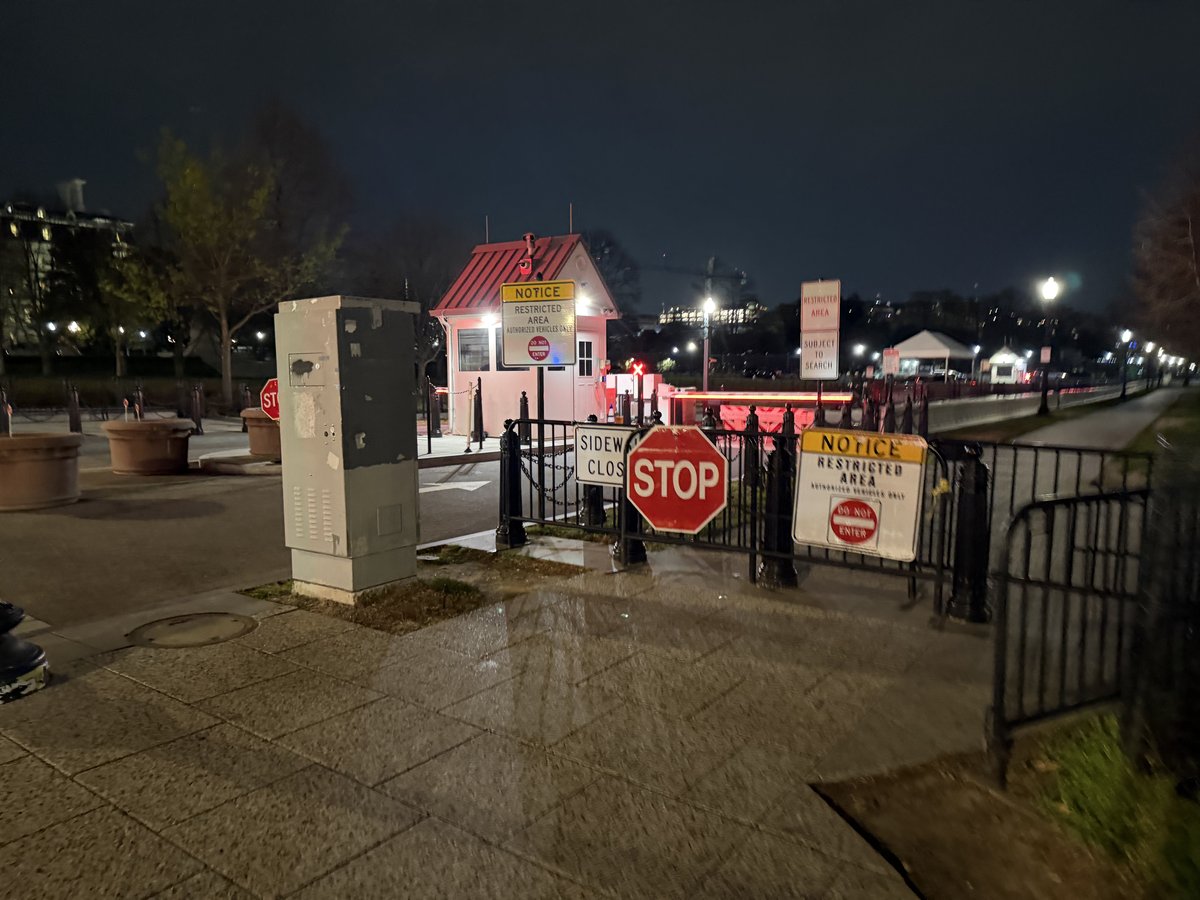 What stood out most, compared to memories of earlier visits from a number of years ago, was how much more restricted the space feels now. Some of that is the active construction. Some of it is the broader, post-9/11, post-protest-era tightening of access that has continued to accumulate around federal sites. Bollards, fencing, barriers, closed perimeters, narrowed pedestrian channels — none of it is dramatic in isolation, but the cumulative effect is a National Mall that you can see and walk through but not really roam the way you used to. That shift has happened gradually enough that any single visit doesn't register it, but come back after a long gap and it's hard to miss.
The monuments themselves, of course, are the same, and they still do the thing they're supposed to do when you stand in front of them at night. But the experience around them has clearly tightened.
Final thoughts
An evening walk from the St Gregory to the Mall is still worth doing — the GW campus walk is pleasant, the monuments at night remain genuinely powerful, and the scale of the Lincoln Memorial is not diminished by a temporary ramp, however unattractive. But March 2026 is not the Mall at its best. Ideally you'd see this place a few months later, after the WWII Memorial has reopened, the undercroft museum has opened, the ramp has come down, and the 250th birthday events have either just happened or are actively happening. Right now it's the backstage version of the show: everyone is visibly working to get it ready, and the seams are showing.
Worth seeing anyway. Worth coming back.