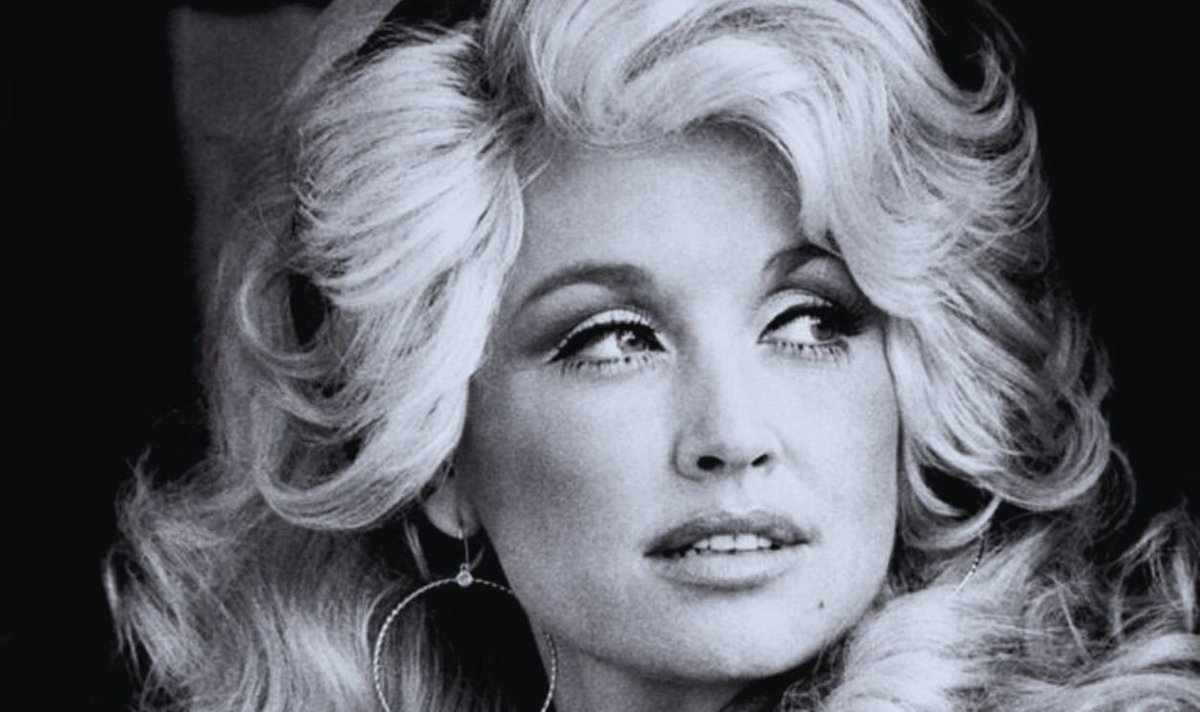
Here You Come Again : Dolly Parton, January 19, 1946 – August 25, 2026
Dolly Parton, January 19, 1946 – August 25, 2026
Her nephew Bryan Seaver — her head of security for more than twenty years — delivered the news in a video on her own Instagram account. He said she'd asked to rest in a bed of plush cotton, because after a lifetime of wearing heavy rhinestones she'd earned some comfort. The last words in the message were the four she'd been handing the rest of us for fifty years: I will always love you.
She was 80. Somehow that still feels like she got shorted.
Country Radio Was Everything
The first Dolly songs I can actually place are "Here You Come Again" and "9 to 5," and there's a good reason for that. Those weren't country hits that leaked out. Those were everywhere.
"Here You Come Again" came out in the fall of 1977 — one of the rare hits she didn't write herself, from Barry Mann and Cynthia Weil. It sat at No. 1 on the country chart for five weeks and climbed to No. 3 on the Hot 100. The story goes that she made producer Gary Klein put steel guitar back on it because she wasn't willing to trade Nashville for pop radio. She wanted both. She got both.
Then came "9 to 5," and that one was a different order of magnitude. Released in November 1980, No. 1 country in January, No. 1 on the Hot 100 in February 1981, No. 1 Adult Contemporary at the same time. She became only the second woman ever — after Jeannie C. Riley with "Harper Valley PTA" — to top the country chart and the Hot 100 with the same single. It won two Grammys and got an Oscar nomination. The movie it came from was her acting debut and pulled north of $100 million.
It's hard to explain to anyone who wasn't around for it how large country music loomed in that stretch. Urban Cowboy had come out that summer and put a mechanical bull in every bar in America. Kenny Rogers was a genuine pop star. Alabama was about to run off a streak of number ones that seems fictional now. Country artists weren't crossing over as novelties — they were sitting at the center of mainstream American entertainment, on network TV, in movie theaters, on Top 40. In 1983 Dolly and Kenny took "Islands in the Stream" to No. 1 on the Hot 100, and nobody thought that was strange.
Dolly was the biggest reason the door was open, and she never once acted like she'd walked through it by accident.
2004, and Every Year After
My first trip to Dollywood was 2004 — Thunderhead's opening season. Great Coasters International, 700,000 board feet of southern yellow pine, 22 turns, 32 crossovers, and that station fly-through that still gets a scream out of people who know it's coming. It won two Golden Tickets for Best Wooden Coaster that first year and it has never once fallen off Amusement Today's top 50 in the two decades since.
I came back a lot after that. Then my Dad and stepmother moved to Afton, Tennessee — about fifty minutes up the road — and "a lot" turned into a habit. Dollywood stopped being a destination trip and became the thing you did on a Saturday because you were already there.
What makes the place work isn't the ride list, though the ride list is legitimately good. It's that the park has a point of view. The craftsmen aren't set dressing. The music isn't piped-in filler. It's a theme park built by someone who actually came from those hills and never got embarrassed about it.
"I'm a Rock Star Now"
The one that got me, as a lifelong Judas Priest guy, was November 2022.
Dolly had famously tried to take her own name off the Rock and Roll Hall of Fame ballot because she didn't think she'd earned it in that particular house. The voters put her in anyway. So she showed up, wrote a brand-new rock song called "Rockin'" for the occasion, and then closed the night leading an all-star "Jolene" with the Zac Brown Band behind her and Pat Benatar, Annie Lennox, Simon Le Bon, Pink, Sheryl Crow, Brandi Carlile — and Rob Halford — trading verses.
Watching the Metal God share a microphone with Dolly Parton on the chorus of "Jolene" is one of those things that shouldn't work and completely does. Both of them are total professionals, both of them are far weirder and more ambitious than their public image lets on, and both of them clearly knew exactly how funny and how great it was. Her speech ended with "I guess I'm a rock star now!" She'd earned that too.
The Part That Wasn't Show Business
The music is the reason we knew her name. It isn't the reason the news hit this hard.
She started the Imagination Library in 1995 in Sevier County, Tennessee, mailing free books every month to kids from birth to age five. By the time the Dolly Parton Experience opened at Dollywood, the live counter inside was nearing 240 million books, and the program was running in five countries — the U.S., Canada, the U.K., Ireland and Australia — mailing about 1.3 million books a month. When the 2016 wildfires tore through Sevier County, the My People Fund sent $1,000 a month for six months to every family that lost a home. She gave $1 million to Vanderbilt in 2020 to help fund early Moderna vaccine research, then another million in 2022 for pediatric infectious disease work. After Hurricane Helene in 2024, she put in $1 million personally and another million through her companies. She took the Carnegie Medal of Philanthropy in 2022.
She never made any of it feel like a press release. She just kept doing it, and kept declining to lecture anybody about it.
Last Summer
Our most recent trip was last summer, and the park is still a treasure. We made a point of going through the Dolly Parton Experience — the big expansion that replaced Chasing Rainbows, three times the size, spread across multiple buildings. Songteller walks you from Locust Ridge to the world. Behind the Seams has the wardrobe preserved with Smithsonian techniques. Precious Memories handles the family and faith side. Her 1994 Prevost tour bus is parked out there, and you can walk through it.
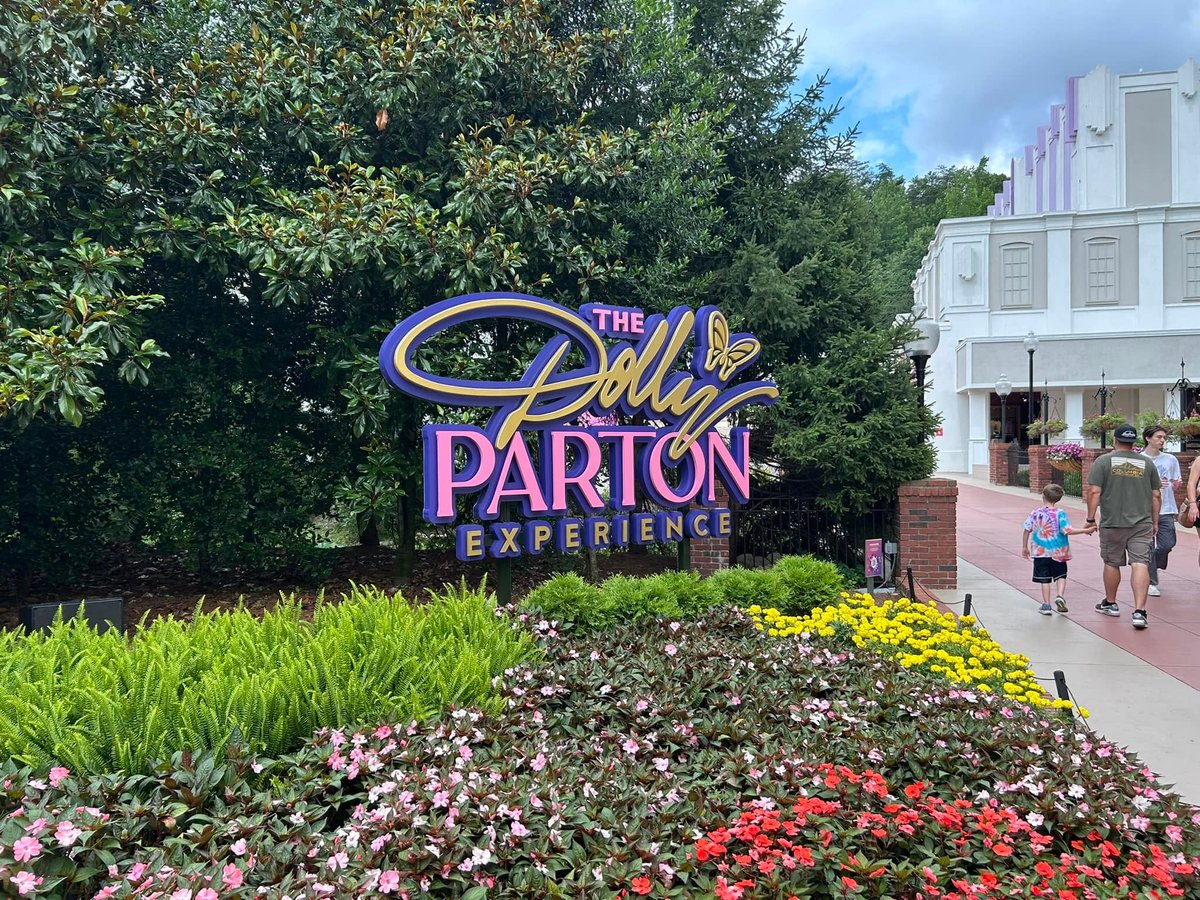 I remember thinking it was an unusually honest museum for a living legend to build about herself. It doesn't skip the poverty. It doesn't skip the part where a girl from a one-room cabin decided she was going to be famous and simply refused to be talked out of it.
Coat of Many Colors
There's a line in "Coat of Many Colors" — the song she said was her favorite of everything she wrote, and which she scratched out on a dry cleaning receipt from Porter Wagoner's suit — about how one is only poor if they choose to be. She wrote that about a hand-me-down jacket the other kids laughed at.
That's the whole thing, really. She got out of Sevier County and then spent sixty years pointing the road back at it: the park, the books, the scholarships, the checks after the fire. She built one of the most recognizable images in American life and used it almost entirely to hold the door open for other people.
Bryan Seaver said her final message was "I will always love you." That's the right ending, and it goes both directions.
Rest easy, Dolly. And thank you.