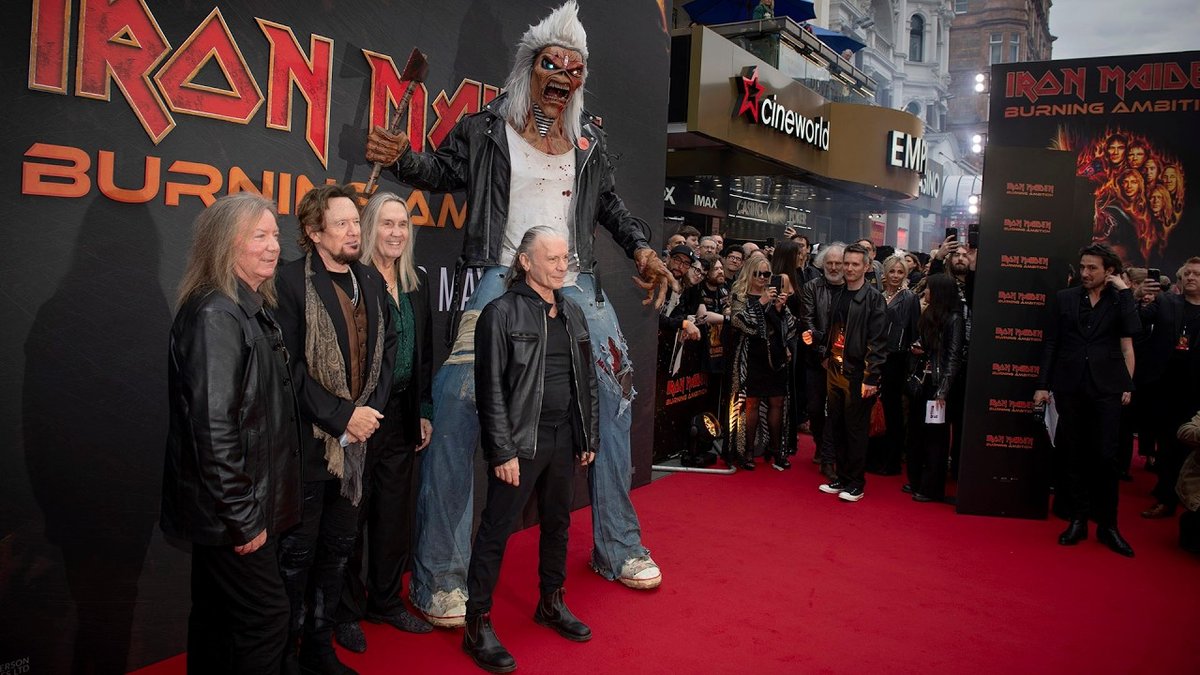
Burning Ambition: Iron Maiden's Story, Told The Way Iron Maiden Wants It Told
Took Preston to see Burning Ambition yesterday. Our usual spot — Cinemark Settlers Ridge — had it tucked into one of the smaller theaters and was pretty much sold out. So we made the drive out to the Cinemark in Monaca, PA instead.
We grabbed lunch at the Wendy's across the street first, which turned out to be a smart move, because the financial damage at the theater started piling up fast. Tickets were "Special Event" priced at $15 each. Split a popcorn, two small drinks, and we were past $50 before the lights even dimmed.
For a little perspective: in 1990, I saw Iron Maiden on the No Prayer on the Road tour for $19.75. Live. With Bruce Dickinson actually on stage in front of me, sweating and screaming, fronting one of the biggest metal bands on the planet. Yesterday, $15 bought me the right to watch a movie about them. Inflation is one thing, but at this rate, by the time the next Maiden documentary drops, I'll be selling plasma to afford the popcorn.
What Works
The film is fairly comprehensive, and it leans hard on Eddie — as it should. Eddie is one of the most important visual identities in rock history, and Burning Ambition gives the mascot the screen time he deserves. The Eddie graphics are great, the archival material is solid, and the film clearly understands how much of Maiden's mystique is wrapped up in that character.
The 1980s Poland concert section is a real standout. Other Maiden documentaries have touched on it before, but this one digs in deeper, and it ends up being one of the strongest stretches of the film.
What Doesn't
The problem with band-authorized documentaries is that they tend to tell the story the band wants to believe. Burning Ambition is no exception.
The No Prayer for the Dying / Fear of the Dark era — arguably their most turbulent stretch creatively and commercially — gets glossed over. There's not much honest wrestling with what went wrong, why the songwriting dipped, or how the relationship with Bruce was fraying in real time.
Speaking of Bruce: the film positions his departure as him wanting to "work as a solo artist," which is a strange way to frame it considering he was already a solo artist. Tattooed Millionaire came out in 1990, three years before he actually left the band. The framing isn't wrong, exactly — just incomplete in a way that feels deliberate.
And then there's Janick Gers. The doc plays his arrival like it was some happy accident, as if the band just stumbled onto him. Anyone who's followed Maiden's history knows Janick had been playing in Bruce's solo project. It's not a secret. The pretense is odd.
The Verdict
All in all, enjoyable and worth a view. If you're a Maiden fan, you'll get plenty out of it — the Eddie material and the Poland section alone justify the trip. Just go in knowing you're getting the band's preferred narrative, not the full picture.
For a more comprehensive history, check out The History of Iron Maiden. It comes in three parts — all of which were originally special features on other releases — or you can just watch it on YouTube. It pulls fewer punches.
Up the Irons.